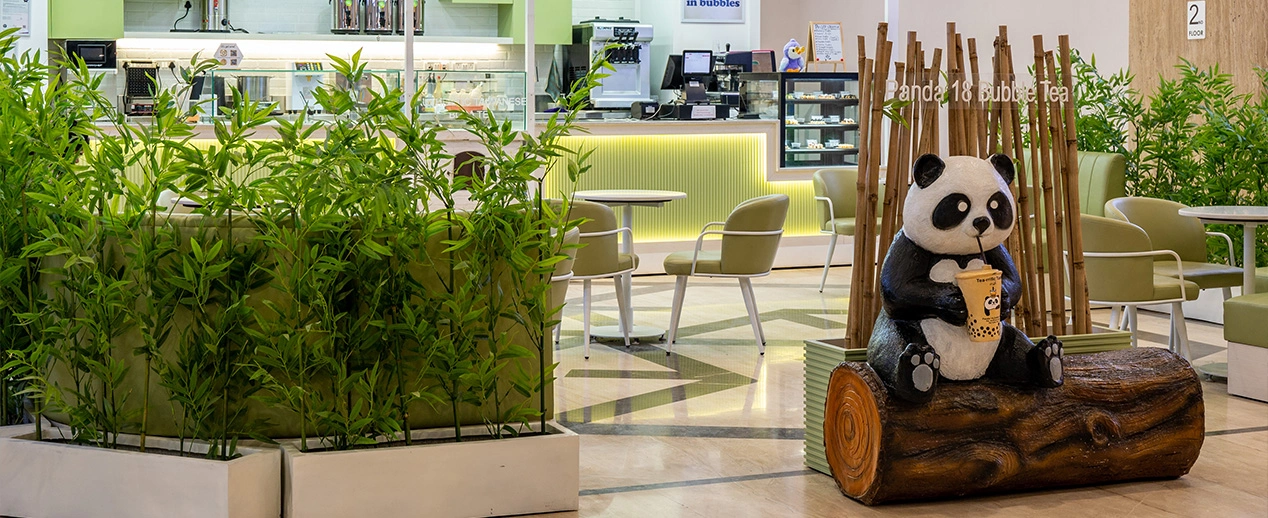
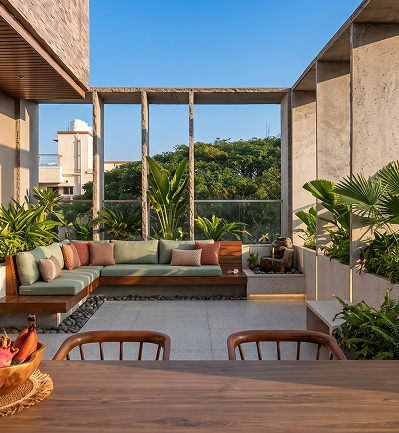
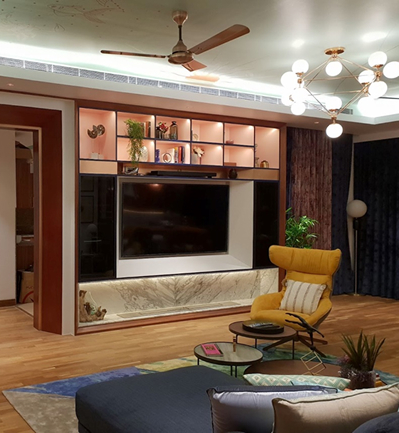
The Space Is No Longer Just a Container
Walk into most offices or retail stores in India, and you will find the same thing. Drop ceilings. Fluorescent lights. Furniture pushed against the walls. The space exists to hold people, not to move them.
But a growing number of Delhi NCR brands are asking a different question. What if the space itself created value?
This is what experience-first commercial interior design is about. It means designing spaces that do more than house a business. They express it. They attract people. They make people want to stay longer, return sooner, and tell others about it.
Why This Matters More Than Ever
Think about the last time you chose a café, a coworking lounge, or a boutique based on how it felt to be there. Chances are you remember the light, the smell, the music, and the texture of the furniture. You remember how the space made you feel before you remember what you bought.
This is not accidental. It is designed.
A 2025 JLL Global Consumer Experience Survey found that 69% of consumers are now willing to pay a premium for high-quality experiences, up from 65% in 2024. The same study found that 73% of consumers prefer visiting multi-purpose destinations over single-purpose ones.
In Delhi NCR specifically, the commercial real estate market is responding. The Delhi NCR retail real estate market posted a 25% rise in leasing during H1 2025, with approximately 5 lakh sq ft leased compared to 4 lakh sq ft in the same period the previous year.
The demand is there. The question is what brands are filling that space with.
What Makes a Space a Destination?
It Tells Your Brand Story Visually
Before a single word is spoken, your space communicates.
- The entry point sets expectations. A reception area designed with intention signals to clients and employees that this brand pays attention to detail.
- Material choices carry meaning. Raw concrete, handcrafted wood, and local stone each say something different about a brand's values and identity.
- Colour and light shape emotion. Warm tones create comfort. Cool tones suggest precision. The right combination can increase dwell time in a retail store by a measurable degree.
It Is Designed Around Human Behaviour, Not Just Aesthetics
This is where many projects go wrong. A beautiful space that fights against how people naturally move and interact is an expensive mistake.
CBRE's 2026 Global Workplace and Occupancy Insights report found that 68% of employees come to the office primarily to collaborate with colleagues. The data shows the most successful offices are now designed as destinations, not just workstations, with priority given to experiences that build community.
For retail, the principle is the same. People do not come to a store just to buy. They come to discover, to feel, to belong to something.
It Creates Zones That Serve Different Moods
A destination space does not have one setting. It has many.
- A quiet corner for focus or one-on-one conversations.
- An open, energetic zone for collaboration or browsing.
- A sensory pause — a plant wall, a skylight, a water feature — that gives the brain a moment to reset.
The best commercial interior designers in Delhi NCR understand that designing for range is not a luxury. It is a strategy.
Beyond the Surface
Here is something most brands do not know. The design of a commercial space affects the biology of the people inside it.
Research from Cornell University, widely cited in workplace design literature, shows that employees with access to natural light reported an 84% reduction in headaches, eyestrain, and blurred vision compared to those without it. This single design variable directly impacts output.
JLL's Design Trends and Cost Guide notes that human-led design — creating spaces that support both collaborative and focused work — is now one of the defining forces in office fit-outs globally. The emphasis is on responsive physical spaces that follow the rhythm of how people actually work, not how organisations assumed they worked a decade ago.
A lesser-known fact: research from Human Spaces found that proximity to natural elements in a workspace is tied to a 15% improvement in employee wellbeing and a 6% rise in productivity. These numbers translate directly into business performance.
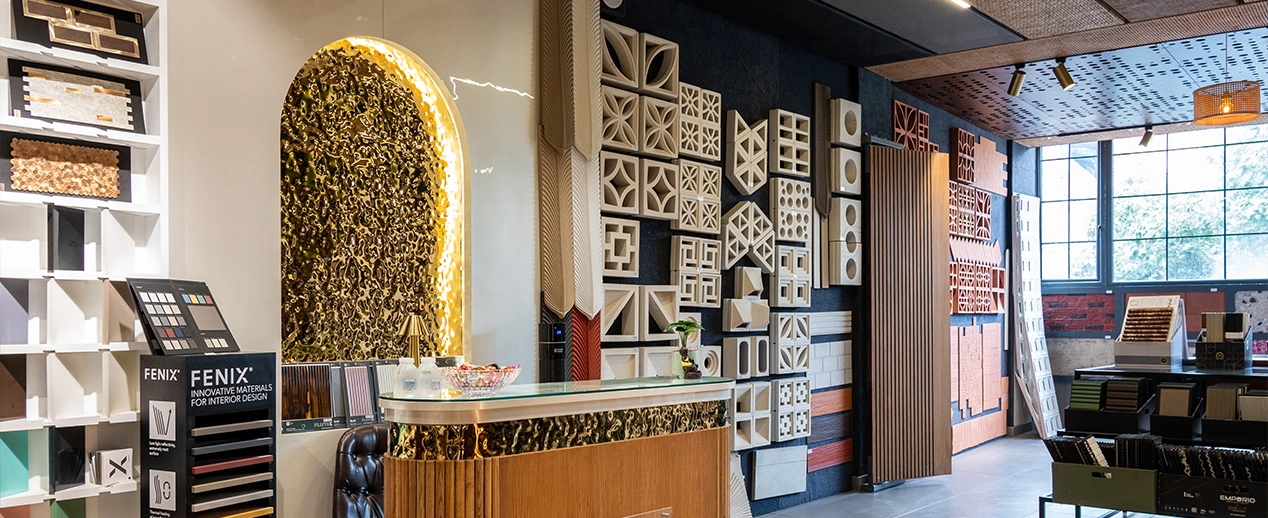
What Destination Design Looks Like in Practice
Offices Built to Attract, Not Just Accommodate
The smartest companies in Gurugram's Cyber City and Noida's tech corridors are not asking "how many desks can we fit? "They are asking, "What kind of culture does this space create?"
That means breakout zones designed for spontaneous conversation. Cafeteria layouts that encourage team mixing. Biophilic walls that reduce stress. Reception areas that feel like the brand itself.
CBRE's research on destination office design notes that creating a holistic experience means investing in amenities that support physical and mental well-being, practical convenience, and a sense of belonging. These are the factors that make employees actively choose to come in, rather than feeling obligated to.
Retail Spaces Built to Be Explored
In retail, the battle between online and offline is not about price. It is about experience.
Over half of the new international retailers entering India in the first nine months of 2024 chose Delhi NCR for their first stores. D2C brands leased retail space with a specific focus on enhancing consumer engagement through experiential formats.
These brands are not betting on footfall alone. They are betting on the fact that a well-designed physical space can do what no website can. It can make a customer feel something.
The Masterclass
Joe Pine, co-author of The Experience Economy and a widely referenced voice in commercial design strategy, has said: "The experience is the marketing. If you stage an experience your customers find compelling, they tell others."
This quote lands differently when you look at how Delhi NCR brands are performing. The ones with spaces worth photographing are the ones being talked about.
How Colonelz Approaches This
Colonelz has built its commercial work around one belief: a space that works hard for a brand does not happen by accident. It is the result of understanding the brand's culture, its customers, and the specific way its people turning through their day.
Working with commercial interior designers in Delhi NCR who bring both design sensibility and operational rigour is what separates a beautiful project from a useful one. At Colonelz, that rigour comes from the principle that every element of a space must earn its place.
The Taggd Office project in Gurugram — a 10,000 sq ft commercial fit-out completed in 2025 — is one example of this in action. The space was designed not just to accommodate a growing team, but to project the energy and culture of the brand to every client and employee who walks in.
An interior design consultation service is where this process begins. It is the stage where business goals, team behaviour, and brand identity are mapped to spatial decisions. Skip this step, and even the most expensive finishes will feel hollow.
What to Ask Before You Begin
Is your current office or store working as hard as your brand deserves?
If visitors walk in and cannot immediately feel what your business stands for, something is missing. If your team finds the space draining rather than energising, that is a design problem with a measurable cost.
The good news: it is solvable. And the commercial interior designers in Delhi NCR who take an experience-first approach have the tools, methodology, and local knowledge to solve it.
References
- JLL Global Consumer Experience Survey 2025 — Experience Matters. https://www.jll.com/en-us/insights/global-consumer-experience-survey
- CBRE 2026 Global Workplace and Occupancy Insights. https://cbre.com/insights/reports/2024-2025-global-workplace-and-occupancy-insights
- CBRE — Beyond the Desk: How to Design Offices That Draw Employees In (2026). https://www.cbre.com/insights/articles/beyond-the-desk-how-to-design-offices-that-draw-employees-in
- JLL — New Workplace Standards Demand an Evolution of Office Design (2024). https://www.us.jll.com/en/newsroom/new-workplace-standards-demand-an-evolution-of-office-design
- IBEF — Delhi NCR Retail Real Estate Market Update (2025). https://www.ibef.org/states/delhi
- IBEF — Indian Retail Space Leasing (2024). https://www.ibef.org/news/indian-retail-space-leasing-to-continue-momentum-likely-to-top-6-5-7-million-sq-ft-in-2024
- Pine, B.J. & Gilmore, J.H. — The Experience Economy. Harvard Business Review Press.
- Cornell University — Natural Light in the Workplace research, cited via Eden Workplace and Human Spaces Report.
- Human Spaces — The Global Impact of Biophilic Design in the Workplace. https://humanspaces.com
 Residential Turnkey
 Residential Design Consultation
 Residential Construction
 Commercial Turnkey
 Commercial Construction
 Workspaces & Offices
 Architectural Turnkey
 Architectural Consultation
 Retail & Hospitality