When Did a Light Fixture Become Art?
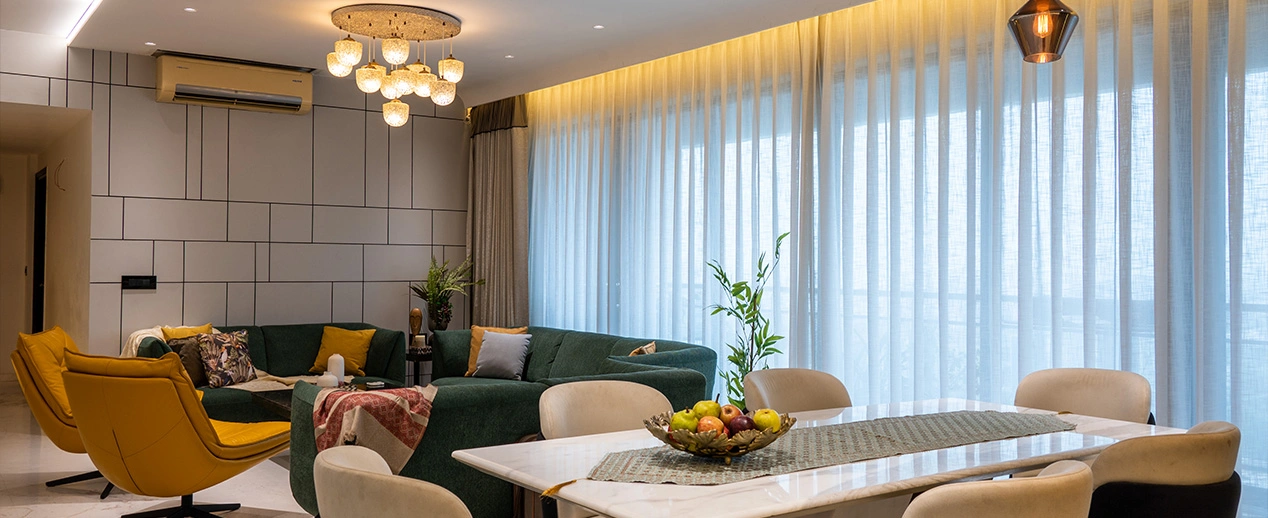
Walk into any well-designed space today, and you will notice something. The piece drawing your eye is not always a painting or a sculpture. Often, it is the pendant hanging from the ceiling, or the floor lamp standing alone in the corner like a reed of bent metal.
This shift has been building for years globally. Lighting designers have started looking at lighting fixtures as more than just a source of illumination, treating them as a tool to make a bold statement through organic and sculptural forms. What began in premium hospitality interiors has now moved firmly into homes and offices.
In India, the shift is especially sharp. The country's high-end decorative lighting market tells the story clearly. India's high-end lighting market was valued at USD 858 million in 2024 and is projected to reach USD 1,673 million by 2033, growing at a CAGR of 7.13%. That is not just utility lighting. That is a market being driven by design intent.
What Makes a Fixture "Sculptural"?
Not every pendant qualifies. So what separates a sculptural fixture from an ordinary one?
- Form over function. A sculptural fixture is designed to hold its visual weight even when switched off. Its shape, material, and scale are all deliberate choices, not afterthoughts.
- Material as message. Beaten brass, hand-blown glass, twisted steel, cast concrete, or woven rattan, the material speaks before the light even comes on.
- Presence in the room. A truly sculptural piece creates a focal point. It organises the space around itself the way a large painting or an art installation would.
- It does not blend in. Unlike a recessed spotlight that disappears into the ceiling, a sculptural fixture is meant to be seen, studied, and remembered.
With a simple flick of a switch, lighting has the ability to completely transform a space, define its ambience, and create a multi-sensory experience. More than just a practical source of illumination, it is a tool for sculpting spaces and making a bold statement.
Why Are Premium Indian Homes Making This Shift?
So what is actually driving this trend in the Indian context? The answer is not one thing. It is several.
The Blank Wall Problem
Premium homeowners in Delhi NCR, Mumbai, and Bengaluru have started facing an interesting challenge. Their homes are beautifully designed, but the walls feel too curated. Art has become expensive, difficult to source well, and hard to scale across multiple rooms. A well-chosen pendant or a statement floor lamp solves all three problems at once. It fills visual space, carries personality, and works in a room corner as well as a double-height foyer.
The Influence of Global Design Weeks
Milan Design Week, London Design Week, and Salone del Mobile now have a direct pipeline into Indian homes through social media and design platforms. Designers like Mathias Hahn have brought a sculptural quality to classic lamp forms, combining smoothly curved steel bases with matching shades available in a range of colours, offering scope for either contrasting or matching tones. These ideas reach Indian buyers within days of launch, not years.
The Indian Craft Advantage
India has something the global market wants: centuries of craft knowledge in metalwork, glassblowing, and weaving. The interior designers for home projects in cities like Gurgaon have started leveraging this. A hand-hammered copper pendant made in Moradabad or a blown-glass fixture from Firozabad carries cultural depth that no imported piece can replicate. It is art in the truest sense, and it lights your room at the same time.
The Office Angle: Sculptural Lighting in Commercial Spaces
The shift is not limited to homes. Commercial interior design in India has seen an equal if not stronger push toward statement lighting, especially in the premium workspace segment.
Think about why this matters. High-quality lighting enhances mood and increases productivity by 8%, whereas poor lighting leads to higher stress levels and decreased performance. But that is about the quality of light. Sculptural lighting adds an additional layer. It communicates something about the company inhabiting that space.
An office that chooses a standard grid of fluorescent panels is saying something. An office that chooses a cluster of custom pendant forms suspended over its reception is saying something very different.
- Reception areas use sculptural pieces to create a first impression that words cannot match.
- Boardrooms benefit from fixture clusters that feel intentional, not standard-issue.
- Collaborative zones use softer pendant groupings to break the clinical feel of open-plan layouts.
- Hospitality-facing businesses like showrooms, design studios, and consulting firms treat their lighting as part of their visual brand.
Office interiors in Gurgaon have led this shift in North India, driven by the influx of design-led companies and global firms that demand environments that reflect their identity.
Words to Design By
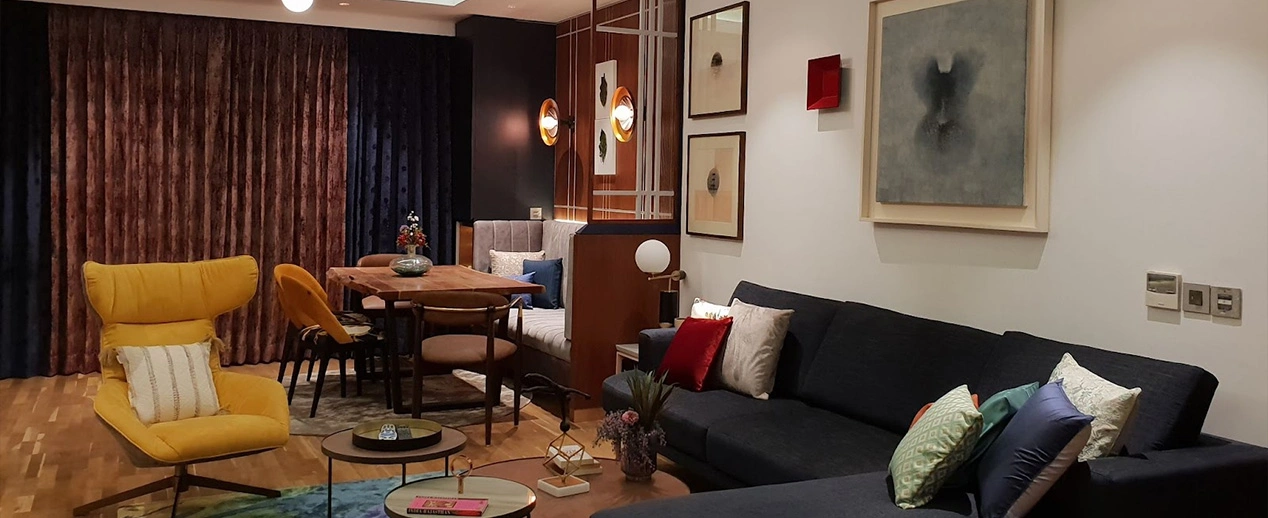
British designer Tom Dixon, one of the world's most recognised voices in sculptural lighting, captured the philosophy precisely. As referenced on his official platform, Tom Dixon's ceiling lights serve as both functional lighting and sculptural pieces, with collections like MELT and VOID offering striking effects for versatile, statement-making displays.
Dixon has said directly: "Instead of using wallpaper for a statement wall as in the 90s, use light to create a wash instead." His WHIRL pendants, with their myriad internal reflections, create the kind of sculptural lighting that looks intentional from every angle. That shift from wall to ceiling, from painted surface to illuminated form, is exactly what premium Indian spaces are now making.
The Nuance of the Glow
Here are a few things most people do not know about how lighting shapes space.
- The Noguchi effect. Isamu Noguchi, the Japanese-American sculptor, was one of the first to blur the line between lighting and fine art with his Akari paper lamps in 1951. His influence flows directly into what is now called "sculptural lighting."
- Fixture-as-anchor. In interior design theory, a large pendant or chandelier performs the same compositional role as the anchor wall in traditional décor. It gives the eye a place to rest and a reference point for the whole room.
- The off-state matters. There is a growing trend for sculptural and innovative lighting designs that don't just light up an interior but also function as a piece of art. This means a well-chosen piece must look compelling in daylight too, not just when switched on.
- Ceiling lighting leads the market. Ceiling lights and chandeliers captured 35.02% of the decorative lighting market share in 2025, reflecting the central role of overhead fixtures in residential living spaces and commercial public areas where visual impact and ambient quality are prioritised.
- 3D printing is changing the game. Designers are now combining 3D printed structures with LED lighting, expanding the possibilities for experimentation with innovative forms, structures, and materials.
How Colonelz Approaches Lighting in Its Projects
Colonelz, the Gurgaon-based design and construction firm founded by Col Biraj Sahay and Capt Lalita Sahay, treats lighting as a layer of design, not an afterthought. Every project begins with a client brief. Every mood board includes lighting as a core visual element.
The best interior designers for home and commercial projects know that a space is not finished when the furniture arrives. It is finished when the light falls right. Whether it is a double-height living room in Sector 90 or a 10,000-square-foot commercial floor like the Taggd Office project, the fixture choice is always deliberate. It is chosen for form, for material, for what it says about the space and the people in it.
Colonelz has delivered over 400,000 square feet of premium interior space in Delhi NCR. That experience makes it clear: lighting is the one element clients notice first and remember longest.
Choosing the Right Fixture: A Practical Guide
Does this mean every home needs an installation-level chandelier? Not at all. The right choice depends on scale, intent, and the story you want the space to tell.
For Residential Spaces
- Double-height foyers: A large-scale pendant or chandelier cluster works best here. Scale is the keyword. A fixture that looks oversized in a showroom is often just right in a tall foyer.
- Living rooms: A single statement pendant over a seating area, or a cluster of three pendants at varying heights, creates focus without crowding.
- Bedrooms: An unexpected bedside wall sconce with a sculptural arm or shade elevates the room without demanding attention.
- Dining areas: This is the most natural home for a statement piece. The fixture should feel like it belongs at the table, not merely above it.
For Commercial Spaces
- Reception zones: A single oversized sculptural piece communicates authority and design intelligence from the moment someone walks in.
- Collaborative areas: Loose groupings of varied pendants at different heights create zones without walls.
- Private cabins and meeting rooms: Understated sculptural pieces work here. They add character without distraction.
The best interior designers for home and office projects will always assess ceiling height, natural light, and floor plan before making a fixture recommendation. It is never just about the fitting itself.
The Indian Design Opportunity
India's decorative lighting market is growing fast. The Indian decorative lighting market reached USD 1.62 billion in 2024 and is expected to reach USD 2.88 billion by 2033, growing at a CAGR of 6.08%. But the more interesting story is qualitative, not quantitative. Indian homeowners and business owners are increasingly choosing fixtures the way they once chose art: with consideration, with cultural reference, and with a desire to say something about who they are.
The best interior designers for home projects in this market understand that a well-chosen fixture will outlast trends. A hand-cast brass pendant with a textured shade carries the same quiet permanence as a good piece of art. It does not follow fashion. It creates identity.
References
- IMARC Group. India High-End Lighting Market Size, Share, Trends, 2033. https://www.imarcgroup.com/india-high-end-lighting-market
- IMARC Group. India Decorative Lighting Market Size, Share and Report 2033. https://www.imarcgroup.com/india-decorative-lighting-market
- ArchDaily. Sculptural Lighting: Blurring the Lines Between Residential, Corporate and Hospitality Design. https://www.archdaily.com/996033
- ArchDaily. 7 Lighting Trends and How They Are Illuminating Today's Interior Spaces. https://www.archdaily.com/998415
- Dezeen. Eight Interiors Illuminated by Sculptural Aesthetic Lamps. https://www.dezeen.com/2024/03/09/sculptural-aesthetic-lamps-interiors-lookbooks/
- Mordor Intelligence. Decorative Lighting Market: Manufacturers, Size & Share. https://www.mordorintelligence.com/industry-reports/decorative-lighting-market
- ResearchGate / Veitch et al. (2021). Impact of Workplace Design on Employee Well-Being and Productivity. https://www.researchgate.net/publication/394230360
- Tom Dixon Official. Designer Lighting Collections. https://www.tomdixon.net/lighting
- Design Public. How Tom Dixon Became the Perfect Guide for Our Strange Hybrid Moment. https://www.designpublic.com/blogs/design-notes
 Residential Turnkey
 Residential Design Consultation
 Residential Construction
 Commercial Turnkey
 Commercial Construction
 Workspaces & Offices
 Architectural Turnkey
 Architectural Consultation
 Retail & Hospitality