What Is the Kitchen Work Triangle?
The kitchen work triangle is a design principle. It connects three key work areas: the sink, the cooktop, and the refrigerator. These three points form an imaginary triangle. The idea is simple. When these three stations are placed at the right distances from each other, you move less. You cook faster. You waste less energy.
It is one of the oldest and most tested ideas in home design. And it still works.
- 78% of professional designers still use the work triangle in at least 70% of their kitchen projects
- 25–30% reduction in average cooking time reported when work triangle guidelines are followed
- 13–26 ft ideal total perimeter of the triangle for maximum efficiency
A Brief History Worth Knowing
Most people don't know this, but the kitchen work triangle did not come from a design studio. It came from a factory floor.
In the 1920s, industrial psychologist and engineer Lillian Moller Gilbreth studied motion patterns of workers in industrial settings. She then applied the same logic to the home kitchen. Her method was called "circular routing." She first demonstrated it in 1929 at a Women's Exposition, where she prepared a dish twice: once in a random kitchen layout, and once in her planned L-shaped layout. The difference in steps taken was remarkable.
Later, in the 1940s, the University of Illinois School of Architecture formalized this into what we now call the kitchen work triangle. The goal was to reduce building costs while also improving how people moved inside the kitchen.
The Three Golden Rules of the Work Triangle
Before looking at layouts, it helps to know the core rules. These are not strict laws. They are practical guidelines. Here is what they say:
- Each side of the triangle should measure between 4 and 9 feet. Too close feels cramped; too far means extra steps every time.
- The total perimeter of all three sides should not exceed 26 feet. Anything beyond that makes daily cooking feel like a workout.
- No major traffic path, like a doorway or a hallway, should cross through the triangle. Interruptions disrupt the cooking flow completely.
- A kitchen island should not cut through any triangle side by more than 12 inches, or it blocks movement between the three stations.
Work aisles should be at least 42 inches wide for one cook, and at least 48 inches for two cooks working at the same time.
Does the kitchen layout really affect cooking time that much?
Yes, it does. A poorly planned kitchen means you walk extra steps dozens of times a day. Over a week, that adds up to significant wasted time and energy. The work triangle is designed to reduce exactly this kind of waste. Research cited by Sinclair Cabinets shows that proper work triangle placement can reduce cooking time per meal by 25-30%.
The Five Common Kitchen Layouts
1. The Single-Wall Kitchen
Everything sits along one wall. A true triangle is not possible here. But the principle still applies. Keep the sink between the cooktop and the refrigerator for the best flow. This layout works well for compact apartments and studio homes.
2. The Galley Kitchen
Two walls face each other with a passage in between. This is one of the most efficient layouts for a single cook. The triangle forms naturally. Keep traffic from passing through the cooking zone.
3. The L-Shaped Kitchen
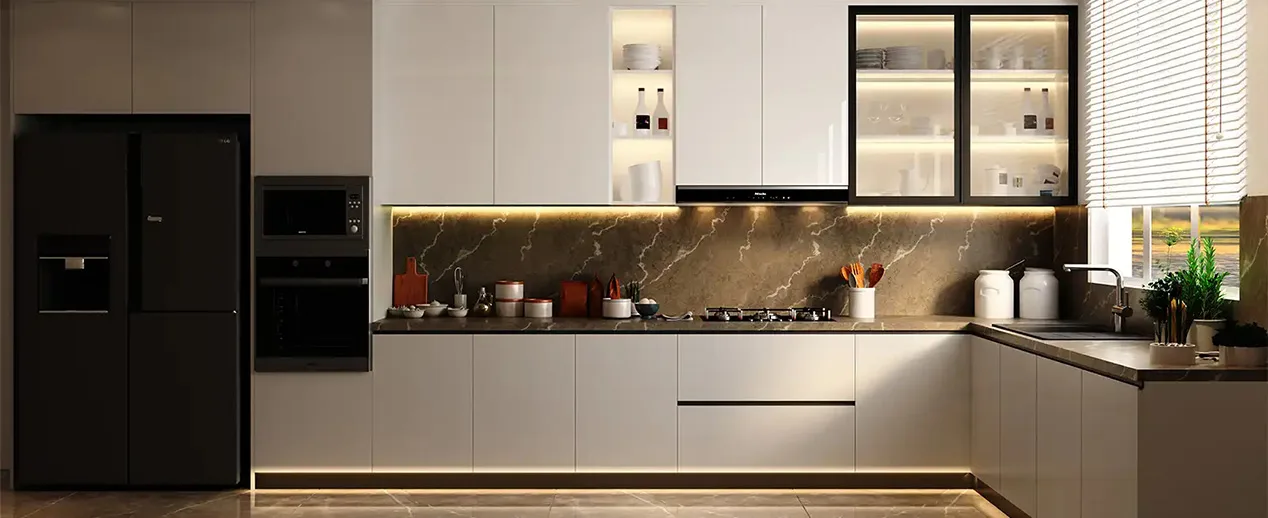
Two walls meet at a corner. This is the layout Lillian Gilbreth herself originally designed. It supports a natural triangle and pairs very well with an island or dining area. It is ideal for open-plan homes.
4. The U-Shaped Kitchen
Three walls surround the cook on three sides. This gives maximum storage and work space. The triangle is tight and very efficient. It is excellent for households that cook frequently.
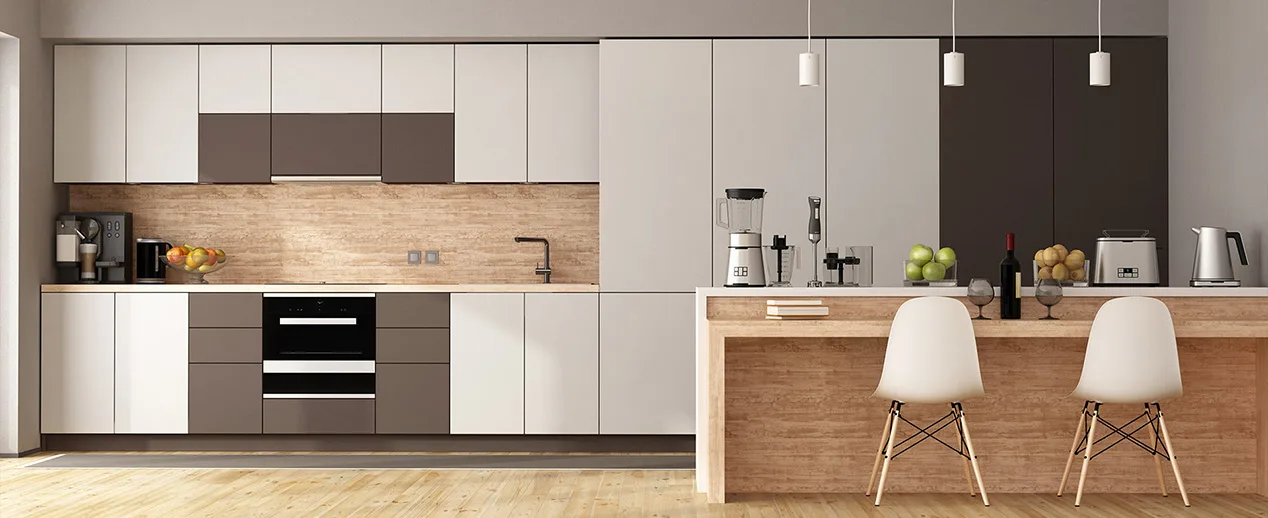
5. The Island Kitchen
An island is added to any of the above layouts. If the island has a sink or a cooktop, it becomes one point of the triangle. This can work very well or create chaos, depending on placement. Plan carefully.
The Modern Shift: From Triangle to Work Zones
Is the work triangle still relevant in today's open-concept kitchens?
This is a fair question. Modern kitchens have grown larger. More people cook together. Appliances like microwaves and dishwashers have added new layers to the workflow. Because of this, many designers now think in terms of work zones rather than a strict triangle.
In the early 1990s, the National Kitchen & Bath Association (NKBA) introduced the concept of multiple work zones as an evolution of the triangle principle. These zones typically include:
- Preparation Zone: Counter space near the sink, dedicated to chopping, washing, and assembling ingredients before cooking begins.
- Cooking Zone: The cooktop and oven area, with landing space on both sides to set down hot pots and pans safely.
- Storage Zone: The refrigerator, pantry, and dry goods storage are positioned to allow quick access without crossing the cooking area.
- Cleaning Zone: The sink and dishwasher together, ideally near the prep zone to reduce back-and-forth movement during cleanup.
- Serving Zone: A dedicated counter or island section for plating, setting out dishes, and casual dining, especially in open-plan layouts.
The zones approach does not replace the triangle. It builds on it. The triangle remains the foundation of efficient kitchen flow.
“Wellness in the kitchen starts long before the design ever takes shape, during the initial conversations of discovery. By mapping out a client's needs and personality in the kitchen, we can select healthy, efficient materials that speak to them.” — Caleb Anderson, NKBA Design Council Member
Lesser-Known Facts That Designers Know, But Most Homeowners Don't
- The refrigerator must have at least 15 inches of counter space on its handle side. Without this, unloading groceries becomes awkward and slow every single time.
- The sink needs at least 24 inches of counter space on one side and 18 inches on the other. This prevents water from splashing onto an unusable surface.
- A cooktop or stove needs 15 inches of landing space on at least one side. This is a safety requirement, not just a convenience feature.
- 90% of homeowners who work from home want a kitchen remodel to improve functionality and aesthetics, according to NKBA's 2025 Kitchen Trends Report.
- The original work triangle was designed for a single cook. Modern kitchens often create a secondary triangle to accommodate two cooks working at the same time.
- Glass doors and large windows are part of the modern kitchen efficiency story. 74% of NKBA members added bigger windows for natural light in recent projects.
- Clutter is a silent enemy of kitchen efficiency. 87% of designers say homeowners now want pantries hidden behind cabinet doors for a seamless, clean workflow.
What happens when you ignore the work triangle in a kitchen design?
When the triangle is ignored, the kitchen becomes tiring to use. You end up crossing paths with yourself. Hot pots travel farther than they should. You waste time and space. In shared kitchens, two people constantly bump into each other. A poorly designed layout also lowers the resale value of a home. Kitchen renovation is one of the highest-return improvements a homeowner can make, but only when the layout is done right.
How to Check If Your Current Kitchen Has a Good Triangle
- Measure the straight-line distance between your sink, cooktop, and refrigerator. Each side should be between 4 and 9 feet for ideal efficiency.
- Add all three measurements together. If the total is under 13 feet, the space feels cramped. If it exceeds 26 feet, you are walking too much.
- Stand at the cooktop and imagine reaching the sink in two or three steps. If it takes five or more steps, your layout needs rethinking.
- Check if any door, cabinet, or island crosses your imaginary triangle. Any major obstruction within this zone breaks the flow completely.
- See if you have enough counter space next to each of the three stations. Missing landing zones are a common oversight in many home kitchens.
How the Right Design Partner Makes the Difference
Understanding the work triangle on paper is one thing. Applying it to a real kitchen, with real walls, doors, windows, and plumbing, is another. This is where professional guidance becomes important.
Residentials interiors designing services today go far beyond choosing tiles and paint colors. A good design team studies how you actually use your kitchen. They map your movement. They look at your habits, your appliances, and your family size. Then they plan a layout that works for your life, not just on paper.
At Colonelz, the approach is rooted in exactly this kind of detailed thinking. Colonelz brings military-grade precision to every design decision. The kitchen is not treated as just another room. It is treated as the operational center of your home.
When you work with residential interior designers who understand both the science of space and the art of living, the result is a kitchen that feels effortless. Every cabinet is where you need it. Every step you take has a purpose. Nothing is wasted.
The best interior designers for home projects do not just hand you a floor plan. They listen first. They ask how many people cook at once. They ask whether you bake regularly. They consider whether you entertain often. These details shape the triangle, the zones, the aisles, and everything in between.
Small Kitchens Deserve Smart Layouts Too
A small kitchen is not an excuse for a poor layout. In fact, small kitchens benefit the most from work triangle thinking. When every square inch counts, placing the right station in the right spot can double the usability of the space.
- In a compact kitchen, aim for a tight triangle with each side close to 4 feet. This minimizes steps without making the space feel locked in.
- A single-wall kitchen can still apply triangle logic by keeping the sink between the cooktop and refrigerator, even on one straight line.
- Use vertical storage to free up counter space. This preserves the landing zones that the work triangle depends on for safe and smooth use.
- A fold-down island or pull-out counter can become a temporary triangle point, adding prep space only when needed and folding away after use.
Work Triangle Meets Residential Interior Design
The best kitchens in India today are the ones that combine efficiency with beauty. The work triangle is the skeleton. The aesthetic choices, finishes, lighting, and materials are the skin. Both need to be planned together from the start.
Good residential interior designing services understand this balance. They do not treat the layout as a purely technical task. They treat it as a design opportunity. A well-placed island can be both a triangle point and a social gathering spot. A smart storage wall can define the prep zone while also looking stunning.
When it comes to interior design for residential spaces, especially kitchens, the goal is always the same: to make life easier without making the space look like it was planned by an engineer alone. The best kitchens feel natural. They flow. They invite you in.
This is the kind of kitchen Colonelz designs. Precision-planned. Aesthetically considered. Built to last and to be loved every single day.
Leading residential interior designing services at Colonelz integrate the work triangle and zone planning from the very first consultation. Whether your kitchen is 80 square feet or 300, the principles remain the same. And the results speak for themselves.
References
- Sinclair Cabinets. (2025). Unlock Your Kitchen's Potential With The Kitchen Design Work Triangle. sinclaircabinets.com
- Wikipedia. (2026). Kitchen work triangle. en.wikipedia.org
- Walker Woodworking. (2025). All You Need To Know About The Kitchen Work Triangle Theory. walkerwoodworking.com
- Whirlpool. (2024). The Kitchen Work Triangle: What It Is & How to Use It. whirlpool.com
- National Kitchen & Bath Association. (2025). NKBA 2025 Kitchen Trends Report. nkba.org
- Kitchen & Bath Business. (2023). NKBA 2023 Design Trends Report. kbbonline.com
FAQs
What is the most efficient kitchen layout for a small home?
The Galley or L-shaped layouts are usually the best for small spaces. They keep all your tools close together and save floor space. Colonelz can help you decide which one fits your specific room dimensions.
Can I have a kitchen island if I want a work triangle?
Yes, you can definitely have an island. In fact, placing the sink or the cooktop on the island often makes the triangle more compact and easier to use. This is a common feature in residential interior designing services.
Is the kitchen work triangle still relevant in modern design?
The rule is still very helpful for most homes today. While some large kitchens now use "work zones," the triangle remains the gold standard for residential interior designers to ensure a smooth cooking flow.
What is the ideal distance between the sink and the stove?
The distance should be between 4 and 9 feet. If the stove is too close to the sink, you lose counter space. If it is too far, carrying heavy pots becomes very difficult.
How do I start planning my kitchen remodel with a professional?
You should first look for the best interior designers for home projects who understand both style and safety. You can reach out to Colonelz to discuss your goals and get a custom plan for your house.
 Residential Turnkey
 Residential Design Consultation
 Residential Construction
 Commercial Turnkey
 Commercial Construction
 Workspaces & Offices
 Architectural Turnkey
 Architectural Consultation
 Retail & Hospitality