Most people think luxury interior design is about expensive furniture or fancy finishes. But the truth goes much deeper than that. A truly luxurious home is one you feel — not just one you see.
Aesthetics vs. Experience: What Is the Real Difference?
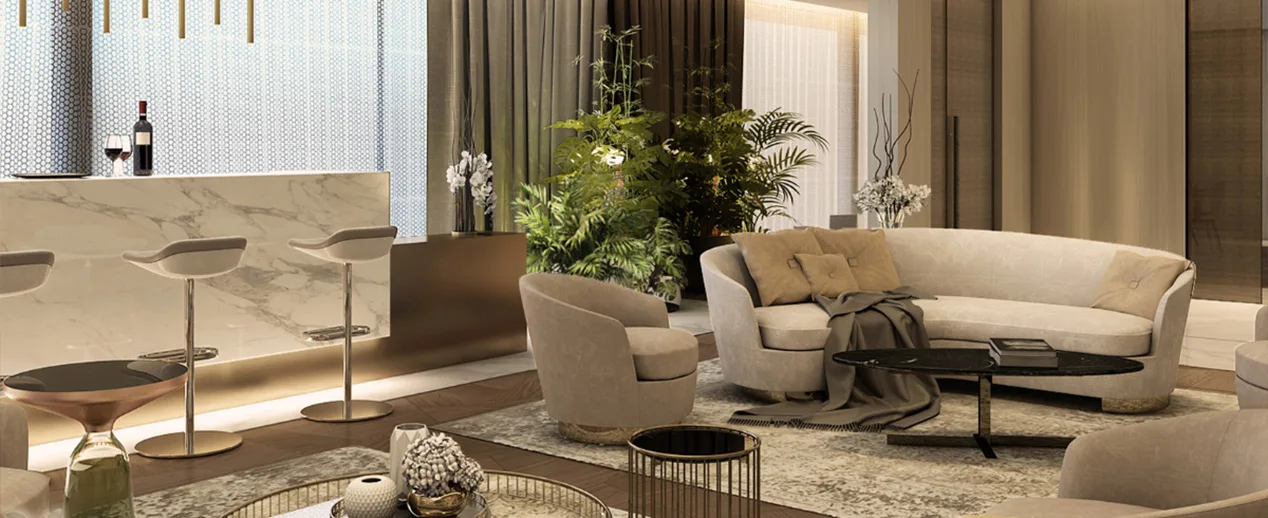
Aesthetics is what you see. Experience is what you feel, hear, smell, and touch every single day. A beautiful room that is poorly lit will tire your eyes. A stunning bedroom with bad acoustics will disturb your sleep. A grand living room that has no warmth will feel cold and unwelcoming, no matter how many expensive pieces it holds.
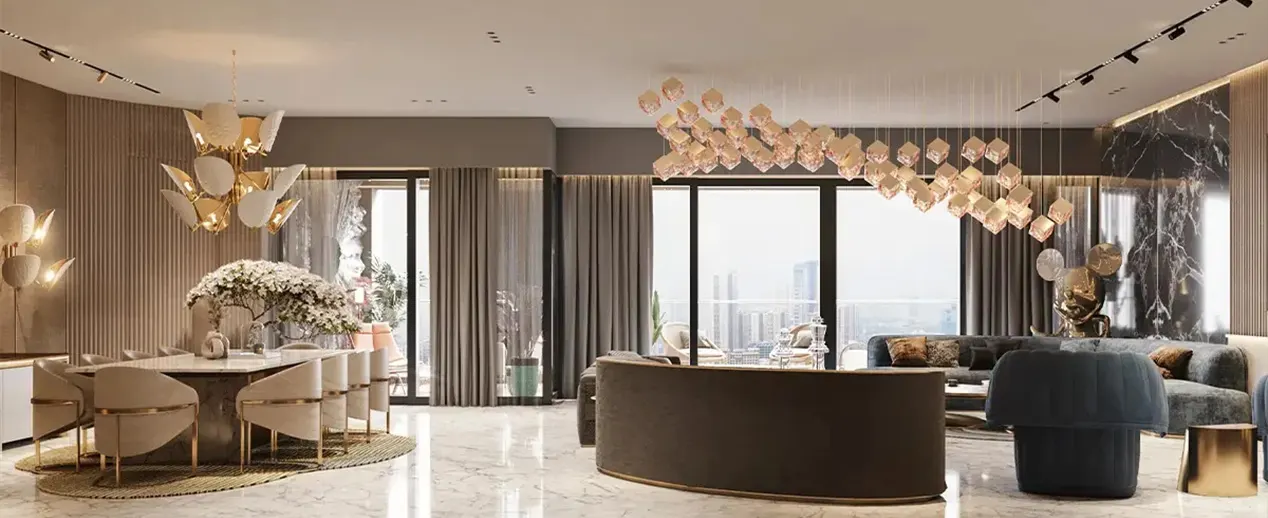
Luxury, in its truest sense, is about removing every point of discomfort from your daily life at home. This is exactly what the top luxury interior designers in Gurgaon focus on so that luxury becomes something you live, not just something you look at.
"A sensory approach to interior design combines materials, colors, fragrances, and sounds to drive emotions and connect humans with their environments, making more sense of the world we live in." — Franky Rousell, Founder and CEO, Jolie Interior Design Studio
The Science Behind How Spaces Make You Feel
So, does design really affect your health and mood? Yes — and there is strong research to back this up.
According to a study published in Frontiers in Psychology, indoor colour and spatial design have a direct effect on emotional states. Separate research in PMC/NCBI found that the psychological response to interior spaces is complex and deeply individual — it is shaped by biology, personality, culture, and personal experience, not just visual preference.
- Natural light is non-negotiable. It supports your body's natural rhythms, boosts serotonin, and lowers stress. Good lighting design is one of the most powerful tools a designer has.
- Sound matters more than you think. Plush upholstery, thick drapes, and layered soft furnishings reduce echo and create a quiet, cushioned atmosphere that feels genuinely restful.
- Scent is the most underrated design element. Thoughtful use of fragrance — through diffusers or even HVAC-integrated systems — can completely change how a space feels on a subconscious level.
- Texture tells a story your hands understand. A handwoven rug or a velvet cushion creates a tactile richness that no image can replicate. It is what makes a home feel lived in and loved.
What "Quiet Luxury" Really Means for Your Home
Ask yourself: do you want a home that looks impressive in photos, or one that makes you feel at peace every single morning?
The American Society of Interior Designers (ASID) highlighted "quiet luxury" as a defining trend in their 2024 Trends Outlook Report — a shift away from flashy, logo-driven design toward spaces that feel calm, personal, and deeply considered.
This shift is about prioritising how a home functions for your life over how it performs for an audience.
- Quiet luxury means fewer, better things. Each item is chosen for how it feels to live with, not just how it looks in isolation.
- It means customisation over a catalogue. Bespoke furniture, hand-crafted details, and made-to-order pieces ensure your home fits your life — not someone else's idea of style.
- It means honest materials. Natural stone, solid wood, linen, and wool age beautifully. They develop character. Synthetic shortcuts never will.
The Five Senses: How Luxury Design Engages All of Them
Most homeowners only think about sight when they plan a home. But a truly luxurious space works on all five senses simultaneously.
Sight
- Proportions, symmetry, and lighting design create visual harmony that feels instantly restful.
- Colour temperature and palette set the emotional tone of every room.
Touch
- Smooth marble against rough linen, warm wood against cool metal — contrast in textures creates sensory depth.
- The weight of a door handle, the softness of a rug underfoot, the cool edge of a stone countertop: these micro-details define the feel of a luxury home.
Sound
- Acoustic design — through material choices, ceiling heights, and soft furnishings — determines whether your home feels like a sanctuary or a noise trap.
- Luxury is quiet. It is the absence of intrusion.
Scent
- Scent is strongly tied to memory and emotion. A signature fragrance, delivered through diffusers or ventilation, can make a space feel yours unmistakably.
Light (as a sensory element beyond sight)
- Layered lighting — ambient, task, and accent — changes the experience of a room at different times of day. A space that is warm and golden at night feels completely different from a bright, day-lit morning room. Both should feel luxurious.
What This Means When You Are Choosing a Designer
This is the question that matters most: how do you find someone who designs for experience, not just appearance?
The answer lies in how they ask questions. The right designer will ask how you sleep, how you move through your home, what sounds bother you, and what kind of light makes you feel your best. They will design around your life — not around a trend board.
Colonelz, brings a unique philosophy to this: every detail is accounted for. Every decision is deliberate. The result is not just a beautiful home — it is one that functions flawlessly for the people who live in it.
The luxury interior designers in Gurgaon at Colonelz approach each project as a complete experience brief. They do not start with a mood board. They start with you — your routines, your family, your aspirations.
More About Luxury Interior Design
These are things most homeowners never hear about, but they make a significant difference.
- Premium and luxury interior design services are the fastest-growing segment in the industry, projected to grow at a 13.84% CAGR through 2031 — far outpacing other design categories.
- The global interior design market stood at USD 137.93 billion in 2024 and is projected to reach USD 228.01 billion by 2033, growing at a 5.29% CAGR.
- Biophilic design — the practice of bringing natural elements indoors — has been shown to reduce anxiety, improve mood, and enhance cognitive function. It is not a trend. It is neuroscience.
- The Asia-Pacific interior design market is expected to grow at a 5.1% CAGR from 2024 to 2030, driven by urbanisation and rising incomes, with India being a key growth engine.
- Color psychology is deeply embedded in design decisions. Ancient Egyptians used specific shades in their spaces intentionally for emotional effect — a practice that modern luxury designers have formalised into evidence-based design methodology.
Experience-Driven Design in Practice: What It Looks Like
A luxury residential interior designer does not hand you a catalogue. They build a process around you. Here is what experience-driven design actually looks like in a project:
- Deep consultation before a single sketch is drawn. The designer studies your lifestyle, not just your Pinterest board.
- Material selection that prioritises tactile quality. Every surface that you touch daily is chosen with care — from the grain of a wooden handrail to the weave of a bedroom curtain.
- Lighting as a mood tool. Layered, programmable lighting systems that shift throughout the day to support your energy and comfort.
- Acoustic planning. Especially in urban homes in Delhi NCR, sound insulation and material-based acoustic treatment can transform a noisy apartment into a true retreat.
- Spatial flow. How you move from room to room, how spaces connect, and how the home "breathes" — these invisible decisions shape the experience of living in a space more than any piece of furniture can.
The best interior design firms in Gurgaon understand that a finished home is not the deliverable. The quality of your daily life is.
Luxury Design in Delhi NCR: Why Location Context Matters
Delhi NCR homeowners face specific challenges that require specific design intelligence.
- Noise from urban surroundings means acoustic design is not optional — it is essential.
- Extreme temperature variation across seasons demands materials and insulation choices that support year-round comfort.
- Dust and air quality concerns make ventilation, material choice, and filtration part of any serious luxury design conversation.
The luxury interior designers in South Delhi and Gurgaon who understand this context do not apply a generic "luxury template" to every project. They design for the conditions — choosing materials, orientations, and systems that make the home a genuine refuge from the city outside.
How Colonelz Translates This Into Your Home
Colonelz operates at the intersection of precision and personalisation. With over 25 years of experience and 400,000+ sq ft delivered, the team has earned a clear understanding of what luxury feels like when it is done right.
The luxury interior designers in Gurgaon at Colonelz take a turnkey approach — meaning they manage every phase from concept to completion. This matters because experience-driven design only works when every element is coordinated. A beautiful lighting plan falls apart if the electricals are not executed to match. A bespoke material choice is wasted if the craftsmanship does not honour it.
What sets Colonelz apart is the discipline behind the design. Timelines are respected. Budgets are transparent. Site visits happen within 48 hours of contract signing. This level of operational rigour is rare in the design industry — and it is what allows the creative vision to be delivered without compromise.
Final Thought: Your Home Should Feel Like a Gift You Give Yourself Every Day
Luxury is not about how much money you spend. It is about the quality of attention paid to your life. When a home is designed for experience — when every sense is considered, when every surface is chosen with care, when sound, light, scent, and texture all work together — the result is a space that genuinely supports you. It reduces stress. It lifts your mood. It makes rest feel like rest and celebration feel like celebration. That is what luxury interior design is really about.
References
- Xu, Y., & Wu, S. (2022). Indoor Color and Space Humanized Design Based on Emotional Needs. Frontiers in Psychology, 13, 926301. frontiersin.org
- PMC/NCBI — The Living Space: Psychological Well-Being and Mental Health in Response to Interiors Presented in Virtual Reality. pmc.ncbi.nlm.nih.gov
- ASID 2024 Trends Outlook Report — American Society of Interior Designers. asid.org
- ASID 2024 State of Interior Design Report. asid.org
- Interior Design Statistics — 30+ Facts (2026). asdav.in, citing Spherical Insights.
- Interior Design Psychology — Wikipedia. en.wikipedia.org
- Rousell, F. (2023). Sensory Interior Design. Quoted in Livingetc. livingetc.com
- Dara Agruss Design — Interior Design Facts & Statistics 2024. daraagrussdesign.com
- Biofilico Wellness Interior Design. biofilico.com
- Katharine Pooley Luxury Interior Design — Creating a Wellness Sanctuary. katharinepooley.com
FAQs
What is the difference between luxury interior design and regular interior design?
Regular interior design focuses mostly on how a space looks. Luxury interior design goes further. It considers how a space feels, sounds, smells, and functions for the people living in it. It is about removing every point of discomfort from your daily life and replacing it with ease, beauty, and calm. The difference is not just budget. It is the depth of thinking applied to every single detail.
Does luxury interior design really affect mental health and well-being?
Yes, and there is solid research behind this. Studies published in Frontiers in Psychology and indexed on PMC/NCBI confirm that lighting, colour, spatial layout, and acoustics directly influence mood, stress levels, and cognitive function. A well-designed home is not just pleasant to look at. It actively supports your mental and physical health every single day.
How do I know if an interior designer is truly focused on experience and not just aesthetics?
Pay attention to the questions they ask during the initial consultation. A good luxury designer will ask about your daily routines, sleep habits, how you move through your home, what sounds bother you, and what kind of light makes you feel your best. If a designer jumps straight to colours and furniture before understanding your life, that is a red flag. Experience-first designers design around you, not around a trend.
Is luxury interior design worth the investment for a residential home?
Absolutely. The global interior design market is projected to grow from USD 137.93 billion in 2024 to USD 228.01 billion by 2033, largely driven by homeowners recognising the long-term value of well-designed spaces. Beyond market trends, a home designed with precision and care saves you the cost of constant redoing, improves your daily quality of life, and holds its value far better than a poorly planned one. It is an investment in how you live, not just in property.
What should I expect from a turnkey luxury interior design service?
A turnkey service means the design firm handles everything from the first consultation to the final handover. You should expect a deep briefing session, a mood board and cost estimate, transparent timelines, regular site visits, and complete coordination of materials, contractors, and finishes. The goal is that you do not have to manage multiple vendors or chase updates. A good turnkey team takes full ownership of the project so you can focus on the outcome, not the process.
 Residential Turnkey
 Residential Design Consultation
 Residential Construction
 Commercial Turnkey
 Commercial Construction
 Workspaces & Offices
 Architectural Turnkey
 Architectural Consultation
 Retail & Hospitality


73164796773394124239.webp)