The Talent Crisis Is Real in Delhi NCR
Delhi NCR is one of the fastest-growing corporate hubs in India. In 2024 alone, the region recorded approximately 9.4 million square feet of net office space absorption, driven largely by Global Capability Centres (GCCs) and multinational companies.
More offices mean more competition for talent. And with so many firms fighting for the same pool of skilled professionals, the question becomes: what makes a person choose to stay?
Why Perks Are No Longer Enough
So, is a good salary and a few office perks enough to hold on to your best employees?
Not anymore. Research tells us a different story.
- 51% of employees globally are either actively searching for a new job or watching out for one — even when they are currently employed.
- 42% of all employee turnover is preventable, according to HR researchers.
- Replacing one employee costs a company roughly 33% of that person's annual salary.
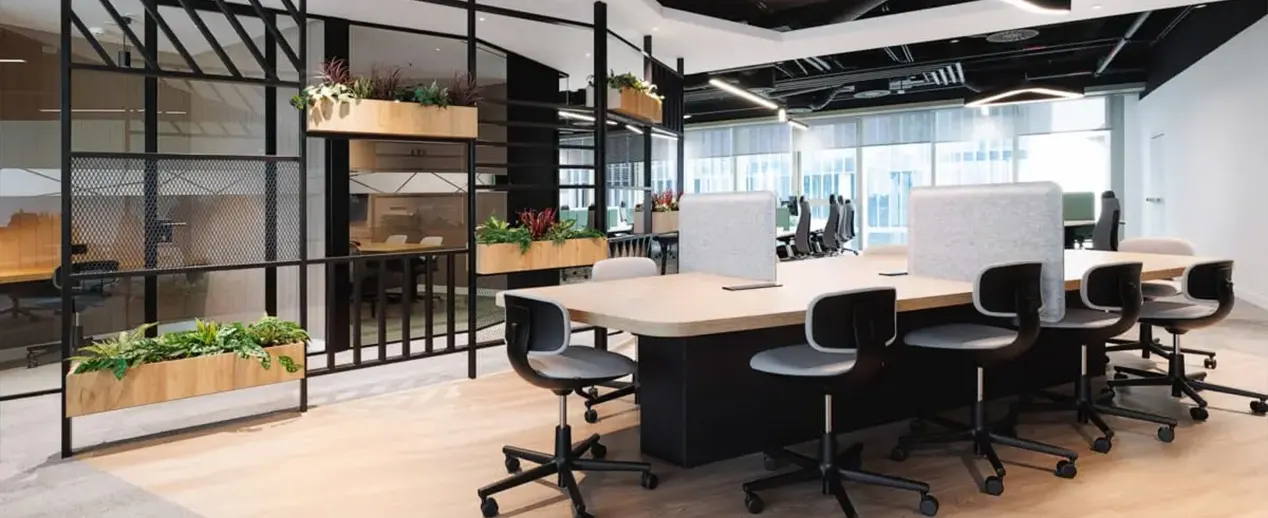
The problem is not always pay or perks. Very often, it is the physical experience of showing up to work every day. When a commercial office interior designs feels uncomfortable, noisy, or uninspiring, people start looking elsewhere — quietly.
The Workspace Is the Message
Does your office space tell employees that you care about them? The physical environment sends a powerful signal. A dull, cramped, or poorly lit office communicates that employee well-being is an afterthought. On the other hand, a well-designed workspace says the opposite.
- 65% of employees believe their productivity would improve if their office matched their ideal workspace.
- Employees with access to natural light and outdoor views report an 18% increase in productivity.
- Biophilic design — the use of natural materials, plants, and green elements — has been shown to raise productivity by 6% and creativity by 15%.
What Good Office Design Actually Looks Like
Good commercial office interior design is not just about aesthetics. It is about function, human comfort, and the feeling a space creates.
Here are the elements that genuinely affect retention:
- Ergonomic furniture: Adjustable chairs, sit-stand desks, and proper monitor placement reduce physical strain. Employees who are not in pain are more productive and happier.
- Acoustic planning: Noise is one of the biggest complaints in open offices. A 2019 Gensler study found that 70% of office workers were dissatisfied with noise levels in their workspace. Sound-absorbing panels and quiet zones fix this.
- Natural light: Cornell University research confirms that access to natural light significantly improves employee health and wellness. Workspaces that maximize daylight directly reduce eye strain, fatigue, and absenteeism.
- Flexible zones: Not all work is the same. A mix of collaborative spaces, focus rooms, and informal lounges allows employees to choose the right environment for each task.
- Biophilic elements: Plants, living walls, and natural materials lower stress and make the office a place people genuinely enjoy being in.
The Delhi NCR Context: A Region Under Pressure
Gurugram leads Delhi NCR's leasing activity, accounting for nearly two-thirds of the region's corporate office demand. With that kind of density, firms are competing not just on salaries but on workplace experience.
GCCs leased nearly 25 million square feet in Delhi NCR in 2024, almost triple what they leased in 2022. These are sophisticated employers who understand that the quality of a workspace directly affects their ability to hire and retain top talent.
A good commercial interior designer in Gurgaon is not just hired to make an office look nice. They are hired to solve a business problem: how do we make this a place where the best people want to spend their day?
What the Science Says About Workspace and Retention
"People stay where they feel good, where they can focus, and where the atmosphere helps them feel energized." — Research insight from the Open Office Design and Its Impact on Employees report.
The science backs this up plainly:
- The physical work environment is cited as a significant determinant of employee productivity, job satisfaction, health, and well-being.
- Employees in open-plan offices with no acoustic or visual privacy experienced worse outcomes across health, satisfaction, and social interactions compared to those in thoughtfully designed spaces.
- A well-planned commercial office interior design approach — one that blends quiet zones, collaborative areas, and biophilic elements — addresses nearly all the major reasons employees feel dissatisfied.
The Hidden Cost of a Bad Office
Most firms track HR costs. Very few track the cost of a bad office.
- The Work Institute's 2024 Retention Report states that U.S. companies spent nearly $900 billion to replace employees who quit in 2023. A portion of those exits was driven purely by a poor physical work environment.
- Employees are influenced by the quality of the environment they enter every day: the design of the office, the layout of their workspace, ergonomics, and the ambience surrounding them.
- Poor workspace design also leads to "quiet quitting" — where employees show up physically but are mentally checked out. McKinsey research suggests that anywhere between one-fifth and two-fifths of a company's workforce could be doing this at any point.
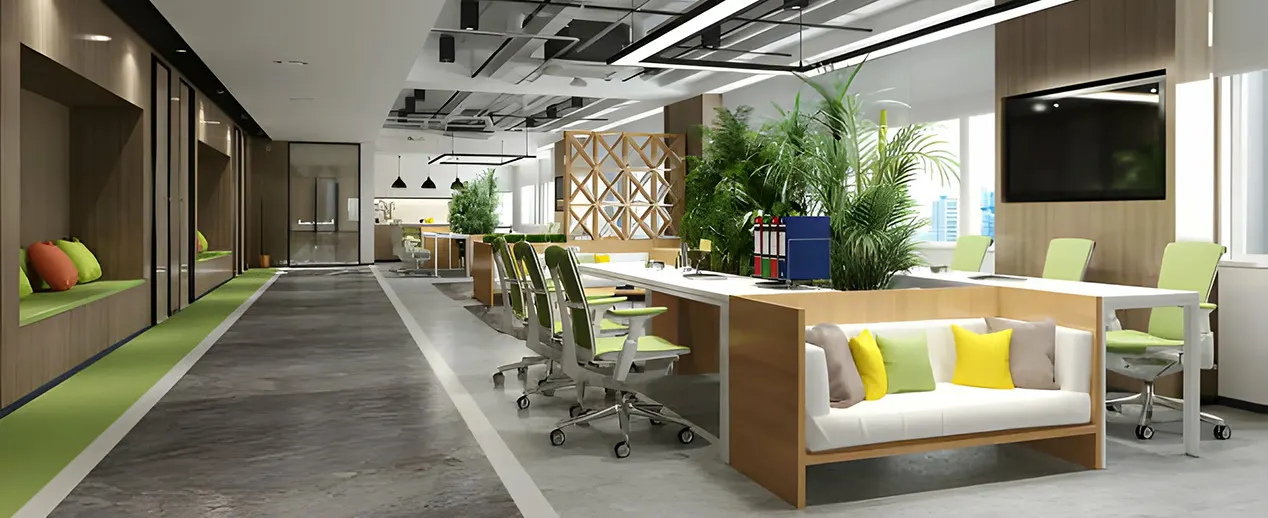
How Firms in Gurgaon Are Getting It Right
The best companies in Delhi NCR are no longer treating office design as a one-time cosmetic exercise. They are treating it as an ongoing investment in culture.
Working with an experienced office interior designers in Gurgaon means getting more than a pretty space. It means getting layouts built around how people actually work — with defined zones, proper lighting plans, and materials chosen for both function and mood.
A skilled corporate interior designer in Gurgaon can help firms:
- Identify which workspace configurations suit their team's daily tasks
- Create flexible layouts that adapt to hybrid work patterns
- Incorporate wellness features that reduce burnout and sick days
- Build spaces that reflect brand identity and make employees proud to come in
Where Colonelz Comes In
Colonelz is a Gurgaon-based interior design and construction firm that brings military-grade precision to every workspace project. Founded by Col Biraj Sahay and Capt Lalita Sahay, Colonelz understands that a great office is not just built — it is planned, executed, and delivered with full attention to detail.
Their commercial office interior design expertise covers everything from initial consultation and spatial planning to final delivery. Firms across Delhi NCR trust Colonelz because the team combines creative design thinking with the kind of structured execution that keeps timelines and budgets intact.
If your firm is looking to reduce attrition, boost morale, and build a workspace that genuinely attracts talent, the starting point is a conversation with a team that has done it hundreds of times before.
The Bottom Line
So, is it really time to stop spending on perks and start investing in design?
Not entirely. Perks have their place. But if the physical environment is overlooked, no amount of free food will fix the problem. Employees feel their workspace. They respond to it every single hour of every working day.
Delhi NCR firms that recognize this early will have a clear edge in the talent market. The ones that do not will keep watching good people walk out — straight into better-designed offices across the street.
References
- Gallup Employee Engagement Report — gallup.com
- Savills UK, What Workers Want, 2019 — via interaction.uk.com
- Human Spaces / Interface, Global Impact of Biophilic Design in the Workplace — via haiken.com
- Cornell University Workplace Study — via officeprinciples.com
- Gensler Workplace Survey, 2019 — via researchgate.net
- James, O., Delfabbro, P., & King, D.L. (2021). A Comparison of Psychological and Work Outcomes in Open-Plan and Cellular Office Designs: A Systematic Review. SAGE Open — journals.sagepub.com
- Work Institute 2024 Retention Report — via selectsoftwarereviews.com
- Open Office Design and its Impact on Employees (2024) — researchgate.net
- The impact of workplace design on academic staff: a systematic literature review (2024) — tandfonline.com
- archivemarketresearch.com — Delhi-NCR Office Space Surge: MNCs & GCCs Flock in 2025
- riseinfraventures.com — Delhi NCR Office Market Gains Momentum from GCC and Corporate Demand
- McKinsey & Company — Quiet Quitting research — via peoplelytics.co
- paycor.com — 13 Employee Retention Statistics Employers Need to Know (2025)
FAQs
How does office design affect employee retention more than perks like free meals or bonuses?
Perks are temporary motivators. The physical workspace affects employees every single hour of every working day. Poor lighting, bad acoustics, and cramped layouts create constant discomfort that no free lunch can fix. Over time, that discomfort pushes people to leave. A well-designed office, on the other hand, signals that the company genuinely values its people — and that feeling builds long-term loyalty.
What are the most important design elements Delhi NCR firms should prioritize for better retention factor?
The biggest impact comes from five areas: ergonomic furniture that reduces physical strain, acoustic planning that cuts noise distractions, access to natural light, flexible work zones that suit different tasks, and biophilic elements like plants and natural materials. Together, these create a workspace where employees feel comfortable, focused, and energized — all of which directly reduce the urge to look elsewhere.
How much does a poorly designed office actually cost a business?
More than most firms realize. Replacing a single employee costs roughly 33% of their annual salary. Add to that the cost of lost productivity from disengaged staff — research suggests up to 40% of a workforce may be quietly disengaged at any given time. A one-time investment in good office design is far cheaper than the recurring cost of high turnover driven by a bad physical environment.
Is biophilic design just a trend, or does it actually make a difference in the workplace?
It is backed by solid research. Studies published through Interface's Global Human Spaces report show that biophilic design raises productivity by 6% and creativity by 15%. Plants, living walls, natural materials, and access to daylight lower cortisol levels and reduce workplace stress. For firms in dense urban areas like Gurgaon and Noida, bringing nature indoors is one of the highest-return design choices available.
How do I know if my current office design is contributing to employee dissatisfaction?
Watch for these signs: rising absenteeism, employees frequently working from home even on mandatory in-office days, low energy in common areas, consistent complaints about noise or temperature, and higher-than-average attrition. If more than one of these is happening, the workspace is likely part of the problem. An audit by an experienced commercial office interior design team can identify what is working, what is not, and what changes will have the biggest impact on how your people feel about showing up.
 Residential Turnkey
 Residential Design Consultation
 Residential Construction
 Commercial Turnkey
 Commercial Construction
 Workspaces & Offices
 Architectural Turnkey
 Architectural Consultation
 Retail & Hospitality