What Is Vastu Shastra, Really?
Most people have heard of Vastu. Few understand what it actually is.
Vastu Shastra is an ancient Indian system of architecture based on the knowledge of sun movement, the Earth's magnetic field, and geopathic zones. Its origins trace back more than five thousand years to the Vedic texts of ancient India, and its development ran alongside astronomy and yoga.
Here is the part that surprises most people: Vastu Shastra traces back to the Stapatya Veda, around 1000–1500 B.C., and research demonstrates that the Vastu Purusha Mandala's 9x9 grid system optimizes building orientation, boosting natural light and ventilation.
That is not mythology. That is environmental design.
Scientifically, the idea of Vastu brings forward a design model that expresses a correlation between function, usage, and purpose — guiding the creation of spaces that are not only aesthetically pleasing but also promote emotional well-being and positivity.
Why Indian Homeowners Are Paying Attention Again
So why is Vastu back in the mainstream conversation?
One big reason is data. A survey conducted by 99acres found that 62% of homebuyers prefer Vastu-compliant homes, and 44% are even willing to pay a premium for them. A separate survey by Anarock found that nearly 80% of homebuyers in India consider Vastu compliance a key factor in their purchasing decision.
That is not a niche preference. That is market demand.
The second reason is lived experience. Many homeowners who have moved into well-designed, directionally aware homes report better sleep, calmer mornings, and more productive days. Science is beginning to catch up with what ancient builders already knew.
"What appeared to be mystical rules about room placement actually optimize natural ventilation patterns and solar heat gain. The ancients did not have thermometers, but they had centuries of lived observation." — Dr. Roshni Udyavar Yehuda, Lead Researcher, IIT Bombay Study on Thermal Comfort in Vastu-Compliant Structures (published in the International Journal of Civil Engineering and Technology)
Researchers at IIT Bombay found that Vastu-compliant structures maintained 18–23% more stable internal temperatures, reducing cooling costs significantly. That is a measurable, practical advantage — not a belief system.
The Core Vastu Principles That Actually Shape a Home
Can Vastu work inside a contemporary flat without looking like a 1990s puja-room redesign? Absolutely. Here is how the principles translate.
Direction and Orientation
- North and east-facing entrances let in morning sunlight, which is UV-rich and supports healthy circadian rhythms. This is not folklore. It is solar geometry.
- The southwest is considered ideal for bedrooms, as it receives minimal direct sunlight — creating a restful environment conducive to sleep.
- Vastu guidelines suggest positioning windows in the north and east to capture morning sunlight, creating spaces that are comfortable and invigorating.
The Five Elements (Pancha Mahabhuta)
At its core, Vastu Shastra is based on balancing the five natural elements — Earth (Bhumi), Water (Jal), Fire (Agni), Air (Vayu), and Space (Aakash). These elements influence human life and behavior, and their correct placement impacts physical and emotional well-being.
In a modern home, this translates to:
- Earth element: Heavier furniture and storage units are placed in the south and west zones for stability
- Water element: Bathrooms and water bodies oriented toward the north or northeast
- Fire element: Kitchen positioned toward the southeast to align with solar heat and improve ventilation
- Air element: Open-plan layouts and cross-ventilation built into the floor plan from the start
- Space element: A clear central zone (the Brahmasthana) kept uncluttered to allow energy and light to flow
Spatial Proportion and Flow
- Rooms sized in balanced ratios rather than arbitrary dimensions promote a subconscious sense of calm.
- Wide corridors and unobstructed entry paths encourage easy movement and reduce daily friction inside the home.
- High ceilings in living areas reflect the Vastu principle of generous "sky space" — and they also happen to make any room look more luxurious.
Where Modern Design and Vastu Conflict — and How Good Designers Resolve It
Does Vastu always align with what clients want? Not always. That is where quality interior design consultation services make the real difference.
Here are the three most common friction points, and how they get resolved without sacrificing aesthetics.
The apartment faces the "wrong" direction
Not every flat in a Gurugram high-rise will have a north or east-facing entrance. Modern Vastu consultants adapt these principles to suit contemporary urban settings. In high-rise buildings where orientations may not be ideal, Vastu remedies such as specific colors, mirrors, or plants are used to balance energy. A skilled interior design consultancy services team will use material selection, lighting placement, and spatial arrangement to achieve Vastu alignment without structural changes.
The open kitchen faces a sensitive zone
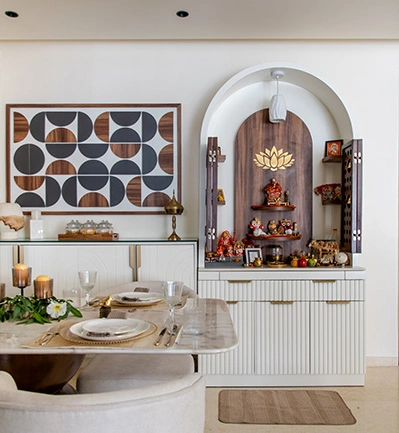
An island kitchen facing northwest or south can be addressed through careful zoning, finish choices, and the strategic use of dividers or screens that are also design features.
The master bedroom is in the wrong quadrant
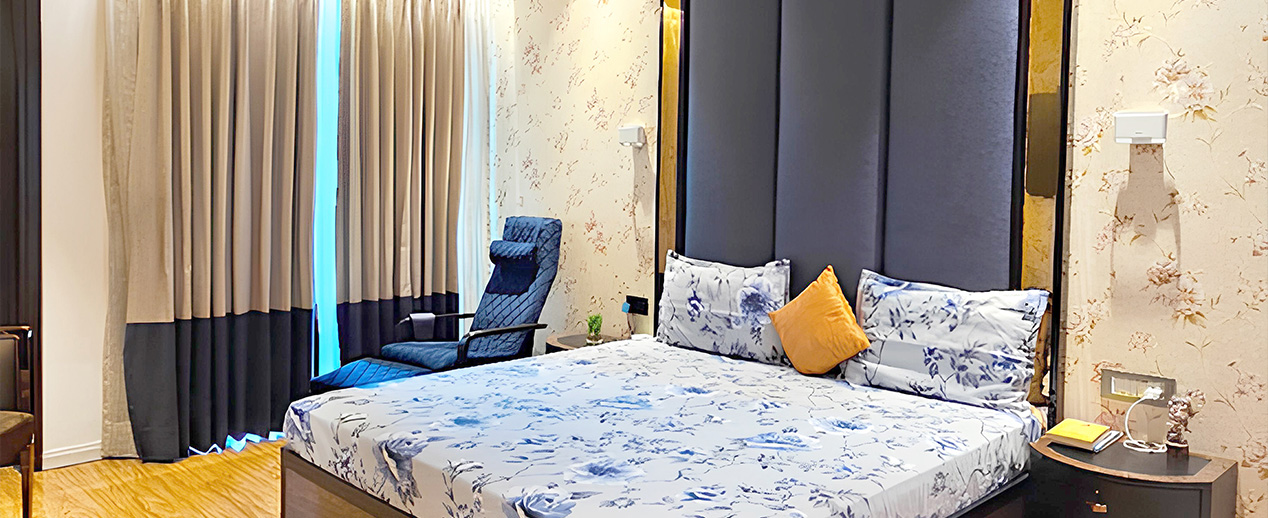
Bedroom placement can be visually and functionally corrected through the use of warm tones, grounding textures, and furniture arrangement that mimics southwest stability without physically moving the room.
More About Vastu and Urban Cities
Most people do not know this: Jaipur, also known as the Pink City, is one of the most famous examples of a city built according to Vastu Shastra principles. Founded in 1727 by Maharaja Sawai Jai Singh II, it was meticulously planned using a grid system that aligns with Vastu guidelines.
The city was not built for spiritual reasons alone. It was built for thermal comfort, natural ventilation, and organised movement of people and goods. The same logic now applies to how a single apartment is designed inside a modern tower.
How Colonelz Brings This to Life in Real Projects
Colonelz is not a firm that pastes Vastu rules onto a finished design. The approach is more integrated than that.
The team, founded by Col Biraj Sahay and Capt Lalita Sahay, brings a background of military precision and disciplined execution to every project. That means Vastu is not an afterthought. It is built into the brief, the mood board, and the execution plan from day one.
What does this look like in practice?
- At the consultation stage, interior design consultation services at Colonelz map the orientation of the space, the direction of natural light, and the client's lifestyle before a single material is chosen.
- At the design stage, spatial zones are planned to respect Vastu logic while accommodating the client's aesthetic brief — whether that is warm minimalism, neo-Indian luxury, or contemporary industrial.
- At the execution stage, the architectural consultancy services team ensures that structural elements like doors, windows, and kitchen placement align with both building codes and directional principles.
The result is a home that feels right. Not because of religious compliance, but because the spatial logic is sound.
As interior design consultants Gurgaon clients often discover that a Vastu-aware design makes a home easier to live in. It reduces visual clutter, improves air circulation, maximises natural light, and grounds each room in a clear purpose.
The Design Elements That Bridge Ancient and Contemporary
How does a Vastu-aware home actually look in 2026? Here is what sets it apart from a generic flat.
- Natural materials as a design choice: Vastu encourages wood, stone, and clay. These also happen to be the materials driving today's warm minimalism and biophilic design trends. There is no conflict here — only alignment.
- Earthy, direction-aware colour palettes: North-facing rooms in cool whites and soft greens. South-facing spaces in warmer terracottas and ochres. This is not a restriction. It is a palette that works with the light in each room.
- Decluttered central zones: The Brahmasthana principle keeps the centre of a home clear. In modern design terms, this means an open plan that breathes — no furniture piled in the middle, no visual noise disrupting the sightlines.
- Entry as an experience: Vastu places significant importance on the entrance. In contemporary homes, this translates to well-lit, intentional foyers with welcoming materials and textures — not an afterthought corridor.
- Water features in the northeast: A small indoor planter, a tabletop water feature, or even a blue-toned artwork in the northeast corner satisfies Vastu logic while adding a design detail that feels considered and calm.
The interior design consultation services process at Colonelz treats each of these not as rules to be followed, but as creative constraints that push the design toward something more resolved.
What This Means for You as a Homeowner
If you are designing or renovating a home in Delhi NCR, here is the practical takeaway.
You do not need a separate Vastu consultant and a separate designer who work in opposition. What you need is a team that understands both. One that has offered interior designing consultancy services long enough to know that the principles behind Vastu — orientation, proportion, natural light, elemental balance — are the same principles that define a well-designed contemporary home.
The ancient builders of India were not guessing. They were observing. And the best designers today are building on that observation — with better tools, better materials, and a much richer understanding of how people actually live.
References
- Jency, P.A. & Atreya, S. (2025). Towards the Future of Vaastu Shastra: A Scientific Inquiry into Design Implementation Enabling Cultural Continuity. New Design Ideas, 9(1), 177–194. https://doi.org/10.62476/ndi.91.177
- Hotwani, M. & Rastogi, P. (2022). Vastu Shastra: A Vedic Approach To Architecture. International Journal of Engineering Research & Technology, 11(2). https://www.ijert.org/vastu-shastra-a-vedic-approach-to-architecture
- 99acres Homebuyer Survey on Vastu Compliance (cited in Punekar News, February 2025). https://www.punekarnews.in/vastu-shastra-boosts-sales-in-real-estate-with-62-of-buyers-preferring-vastu-compliant-homes/
- Anarock Homebuyer Preference Survey on Vastu (cited in Triguna Projects). https://www.trigunaprojects.com/the-impact-of-vastu-for-house-plans-on-real-estate-sales-and-purchase-choices/
- IIT Bombay Thermal Comfort Study on Vastu-Compliant Structures — International Journal of Civil Engineering and Technology (cited in WikiIndia, November 2025). https://wikindia.org/vastu-shastra-modern-architecture-ancient-wisdom/
- Morphogenesis. Vastu Shastra Explained: Origins & Relevance Today. https://www.morphogenesis.org/media/vastu-shastra-explained/
- Design Dash. Vastu Shastra: The Ancient Science of Integrating Architecture and Nature. https://designdash.com/design/vastu-shastra-the-ancient-science-of-integrating-architecture-and-nature/
FAQs
1. Is Vastu Shastra relevant for modern apartments in Gurugram or Delhi?
Yes. While not every principle applies directly to a high-rise flat, the core ideas — orientation, natural light, ventilation, and spatial balance — are directly relevant. A skilled designer can apply Vastu logic using materials, colours, and furniture placement without any structural changes.
2. Does following Vastu mean the design will look traditional or outdated?
Not at all. Vastu principles are about spatial logic, not visual style. A Vastu-aware home can be completely contemporary — minimal, luxurious, or industrial in aesthetic while still being oriented and arranged correctly.
3. What is the Brahmasthana, and why does it matter in interior design?
The Brahmasthana is the central zone of a home in Vastu Shastra. It is meant to remain open and uncluttered so that light and air can circulate freely. In modern design, this principle supports open-plan layouts and prevents the overcrowding of central spaces — a principle that holds regardless of whether you follow Vastu.
4. How early in the project should Vastu be considered?
Ideally, from the first consultation. Vastu decisions that are baked into the layout and orientation of a home are far more effective than remedies applied after construction. The earlier the conversation, the more options a designer has to integrate principles naturally.
5. Can Vastu compliance increase the resale value of a home?
Evidence suggests yes. According to survey data, Vastu-compliant homes often sell faster and attract more buyers than non-compliant ones, with a significant portion of buyers willing to pay a premium for them. In Delhi NCR's competitive real estate market, this is a practical advantage worth considering.
 Residential Turnkey
 Residential Design Consultation
 Residential Construction
 Commercial Turnkey
 Commercial Construction
 Workspaces & Offices
 Architectural Turnkey
 Architectural Consultation
 Retail & Hospitality