Design psychology is a growing field, and its findings are hard to ignore. Studies show that the built environment we live in affects stress levels, sleep quality, productivity, and even how we relate to the people we live with. When you understand these connections, you stop decorating and start designing — with intention.
This piece breaks down the key psychological forces at play in your home and explains how thoughtful design choices can genuinely improve your quality of life.
Color Is Not Just Aesthetic — It's Emotional
Color may be the single most powerful tool in any designer's kit. It triggers emotional responses before the conscious mind even registers what it's seeing. A 2020 study published in Frontiers in Psychology found that warm colors like red and orange increase arousal and energy, while cool colors like blue and green promote calm and focus.
That's not just theory. Think about why fast food chains use red and yellow — it stimulates appetite and speeds up decision-making. Now imagine bringing that same palette into your bedroom. Not ideal for sleep.
Here's a practical breakdown of how common colors affect mood at home:
- Blue and soft greens: Lower heart rate and blood pressure. Excellent for bedrooms and bathrooms.
- Warm yellows: Stimulate creativity and optimism. Work well in kitchens or home offices — in moderation.
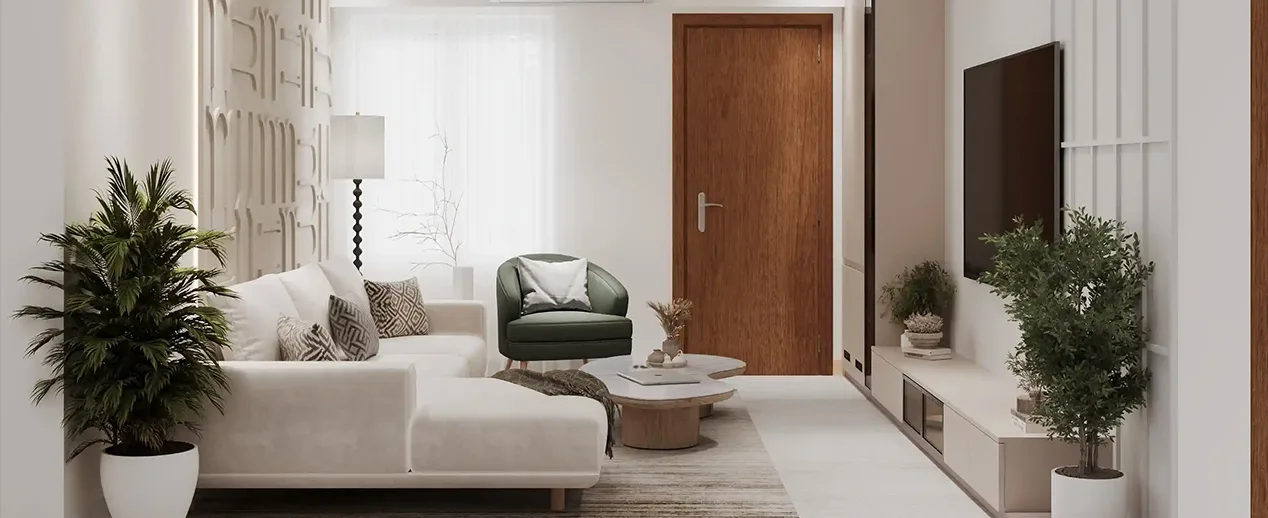
- Neutral tones (warm whites, beiges, taupes): Create mental clarity and visual rest. Great for living areas and open-plan spaces.
- Deep tones (navy, forest green, charcoal): Add depth and emotional warmth. Used thoughtfully, they make a room feel grounded rather than heavy.
This is why residential interior designing service that prioritize color psychology — not just color trends — make a real difference in how a home feels to live in day after day.
Space Affects State of Mind More Than You Think
Cramped spaces create psychological compression. You may not consciously notice it, but living in a cluttered or poorly proportioned room raises cortisol — the body's primary stress hormone. A study by Princeton University Neuroscience Institute found that physical clutter competes for attention, reduces performance, and increases stress.
On the other end, a room that's too sparse can feel cold and disconnected. Good spatial design finds the balance — enough openness to breathe, enough warmth to feel at home.
Ceiling height is one often-overlooked factor. Higher ceilings have been linked to more abstract, creative thinking. Lower ceilings promote focused, detailed work — which is why a cozy study nook can actually be more productive than a grand open-plan office.
Natural light is equally critical. Research from the World Green Building Council found that workers in well-lit environments reported an 18% improvement in productivity. At home, the same principle applies. Rooms that maximise daylight reduce fatigue, improve mood, and even regulate sleep cycles through the body's circadian rhythm.
What the Experts Say About Space and Psychological Health
Environmental psychologist Dr. Sally Augustin has spent decades studying how physical environments influence behaviour. In her work, she notes that the best spaces don't just look beautiful — they support the activities and emotional states we need to thrive in.
"The spaces we inhabit shape us. A room that supports the activities we do in it, and our psychological needs during those activities, is a room that genuinely serves us." — Dr. Sally Augustin, Environmental Psychologist & Author of Place Advantage
This is particularly relevant when thinking about interior design for residential spaces. A well-executed residential design isn't about status or aesthetics — it's about building an environment that works for the specific people who live there.
Movement and Flow: How You Move Through a Home Matters
Traffic flow is a concept designers think about constantly, but homeowners rarely consider. How do you move from the entrance to the kitchen? Where do you naturally pause? What does the journey from bedroom to bathroom feel like at 3 am?
Poor spatial flow creates friction — subtle but cumulative. When furniture placement forces awkward paths, when doorways feel cramped, or when rooms don't connect logically to how they're used, it creates low-level daily stress. You don't always know why you feel slightly on edge at home. Sometimes it's the layout.
Thoughtful flow design considers:
- Zoning: Separating active areas (kitchen, living) from rest areas (bedrooms) to protect sleep quality.
- Transition spaces: Entryways and hallways that act as psychological decompression zones between the outside world and private life.
- Furniture placement: Arranging seating to encourage natural conversation rather than isolation.
- Sightlines: Creating views that feel open and inviting, or intimate and contained, depending on the room's purpose.
This level of intentional thinking is what separates generic renovation from genuine residential interior designing services. The best interior designers for home projects understand that how a space functions emotionally is just as important as how it looks in photographs.
Why Professional Design Makes a Measurable Difference
Many homeowners believe professional interior design is a luxury. The data suggests otherwise. According to the National Association of Realtors (NAR), professionally staged and designed homes sell faster and for 1–5% more than comparable properties. But the return on a well-designed home isn't just financial.
A 2019 study from the Journal of Environmental Psychology found that individuals living in spaces they perceived as orderly, beautiful, and personalised reported significantly higher life satisfaction. Not marginally higher — significantly. That's a compelling case for investing in residential interior designing services rather than treating design as an afterthought.
In cities like Gurgaon, where urban density and fast-paced living are the norm, the home becomes even more critical as a restorative environment. Home interior designers in Gurgaon who understand both global design psychology and local lifestyle nuances can create spaces that genuinely counterbalance the stress of city living.
At Colonelz, the approach to residential design is grounded in exactly this philosophy. Every project begins with understanding how the people who live there actually use their home — how they wake up, how they wind down, how they work, how they host. That insight drives decisions on color, space, light, and flow that most off-the-shelf renovation services never think to ask about.
Small Changes, Big Psychological Returns
Not every improvement requires a full renovation. Some of the most impactful design changes are smaller in scale but significant in effect. Here are evidence-backed adjustments that can improve well-being at home:
- Add indoor plants: A study by NASA found that certain houseplants reduce indoor air pollutants. More relevantly for well-being, multiple studies confirm that biophilic elements (natural materials, plants, water features) reduce cortisol and increase feelings of calm.
- Switch to warm-toned lighting: Harsh overhead fluorescent lighting increases alertness but not comfort. Warm, layered lighting in living areas signals the brain to relax.
- Declutter deliberately: Rather than a one-time purge, adopt storage solutions that make tidiness easy to maintain. Consistent visual order reduces background cognitive load.
- Personalise meaningfully: Displaying objects that hold personal significance — family photographs, travel souvenirs, artwork you genuinely love — creates a sense of identity and belonging that generic show-home spaces lack.
Colonelz has worked with hundreds of homeowners across India to bring exactly these principles to life — balancing the science of well-being design with the art of creating spaces that feel unmistakably personal. Their residential interior designing services combine technical expertise with a deep commitment to understanding each client's life, not just their aesthetic preferences.
References
- Elliot, A. J., & Maier, M. A. (2014). Color psychology: Effects of perceiving color on psychological functioning in humans. Annual Review of Psychology, 65, 95–120.
- McMains, S., & Kastner, S. (2011). Interactions of top-down and bottom-up mechanisms in human visual cortex. Journal of Neuroscience, 31(2), 587–597. (Princeton University Neuroscience Institute research on clutter and attention)
- World Green Building Council. (2014). Health, Wellbeing & Productivity in Offices. WGBC Report.
- Augustin, S. (2009). Place Advantage: Applied Psychology for Interior Architecture. Wiley.
- National Association of Realtors. (2021). 2021 Profile of Home Staging Report. NAR Research Group.
- Kaplan, R., & Kaplan, S. (1989). The Experience of Nature: A Psychological Perspective. Cambridge University Press. (Foundational biophilic design research)
- Meyers-Levy, J., & Zhu, R. (2007). The influence of ceiling height: The effect of priming on the type of processing that people use. Journal of Consumer Research, 34(2), 174–186.
FAQs
Does interior design really affect mental health, or is that overstated?
It's not overstated — it's underreported. Decades of environmental psychology research confirm that the spaces we inhabit directly influence stress levels, mood, cognitive performance, and even sleep quality. The effects are subtle enough that most people attribute them to other causes, but the evidence is consistent and compelling. Investing in thoughtful residential interior designing services is a legitimate investment in mental health.
How much does professional interior design typically cost in India?
Costs vary widely depending on scope, city, and the design firm. In major cities like Gurgaon, Mumbai, and Bangalore, mid-range residential interior designing services typically range from ₹800 to ₹2,500 per square foot for a comprehensive project. Colonelz offers transparent pricing and project-specific consultations to help homeowners understand exactly what they're investing in before committing.
What should I look for when choosing interior designers for my home?
Look beyond a strong portfolio. The best interior designers for home projects will ask about your lifestyle, daily routines, pain points with your current space, and long-term plans — not just your aesthetic preferences. They should demonstrate knowledge of spatial planning, lighting, and materials, not just styling. Verify their project management process and ask for references from past residential clients.
Can small apartments benefit from design psychology principles?
Absolutely — and arguably more so. Compact spaces are where poor design choices have the most impact on daily quality of life. Strategic use of mirrors, light tones, multi-functional furniture, and carefully considered flow can make a small apartment feel significantly more spacious and comfortable. Design psychology principles scale to any size.
How does Colonelz approach the psychological dimension of home design?
Colonelz takes a people-first approach to every project. Their team begins each residential project with an in-depth consultation that explores how the family lives, not just how they want their home to look. From there, design decisions on color, layout, lighting, and material are informed by both design principles and an understanding of what will genuinely improve daily life for that specific household. You can learn more about their approach at colonelz.com.
 Residential Turnkey
 Residential Design Consultation
 Residential Construction
 Commercial Turnkey
 Commercial Construction
 Workspaces & Offices
 Architectural Turnkey
 Architectural Consultation
 Retail & Hospitality