What Is Warm Minimalism, Exactly?
Turnkey interior design firm Gurgaon states that ‘Warm minimalism is not just a colour palette. It is a design philosophy.’
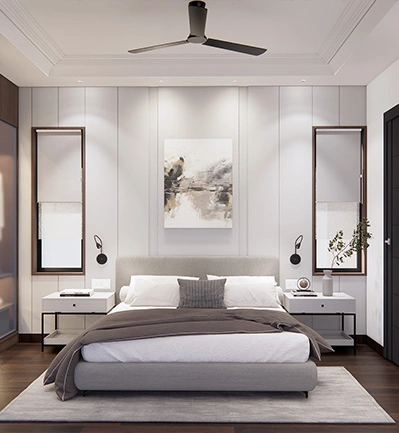
It keeps the core of minimalism intact: clean lines, uncluttered spaces, and purposeful layouts. But it replaces the cold sterility of grey-and-white interiors with materials, tones, and textures that feel human and grounding.
Think creamy beige walls instead of clinical white. Think solid walnut shelving instead of glossy laminate. Think handwoven jute rugs instead of smooth, polished concrete.
The question worth asking here is: why did grey interiors ever become so popular in India to begin with?
The answer goes back to the early 2010s. Minimalism arrived in Indian metros through global design magazines and social media. Grey was treated as the "safe" neutral. It photographed well. It felt modern. It became the default.
But it was never designed for Indian light, Indian sensibilities, or the Indian way of living.
Why Grey Interiors Never Quite Worked for Indian Homes
The Problem with Cold Palettes in Tropical Climates
India receives some of the most intense sunlight in the world. In cities like Gurugram, where summer temperatures regularly exceed 45 degrees Celsius, the light quality indoors is very different from Scandinavian or Northern European homes, where grey minimalism was originally conceived.
- Grey tones absorb Indian daylight harshly. They can make interiors look dull, flat, or even bleak under the golden hue of Indian afternoon sun.
- White walls reflect glare. In high-sun environments, stark white surfaces create uncomfortable brightness without softness.
- Cold interiors can increase psychological stress. Research published in Frontiers in Psychology confirmed that indoor colour and spatial design directly affect emotional states and mental well-being.¹
Grey interiors were borrowed from a design context that did not match Indian living conditions. It took a decade for Indian homeowners to collectively realise this.
The Rise of Warm Minimalism in 2026
What the Data Says
The Indian interior design market is not just changing aesthetically. It is growing fast.
The Indian interior design market was valued at USD 36.89 billion in 2025 and is projected to reach USD 74.73 billion by 2034, growing at a CAGR of 8.16%. Residential design is the fastest-growing segment within this, driven by rising incomes and the desire for more intentional, personal spaces.
North India commanded 39.87% of the market in 2025, and the residential segment is expected to expand at a 16.47% CAGR through 2031 as incomes rise and housing programs mandate finished interiors.
This growth is not happening in a vacuum. It is being shaped by a specific direction: homeowners want warmth, authenticity, and meaning. Not just aesthetics.
"If 2025 was about perfection, 2026 is about meaning. We are stepping into a more emotionally intelligent era of design, one that asks not how a space photographs, but how it makes us feel." — Outlook Luxe, reporting on the 2026 interior design shift²
This is the central truth behind warm minimalism. It is not just a trend. It is a response to how people actually want to live.
The Key Elements of Warm Minimalism
Colour
So what does a warm minimalist home actually look like? Start with colour.
- Terracotta, clay brown, and soft ochre are replacing grey and white as the dominant wall colours in Indian homes.
- Warm off-whites and cream tones create softness without losing the minimalist sense of openness.
- Sage green and muted olive are emerging as natural accent tones. They feel grounded and connect the space to nature.
Indian interiors in 2026 are embracing earth-inspired colours such as warm beige, terracotta, olive green, and sand tones. These shades create calm, welcoming spaces and work beautifully with Indian lighting conditions.
Materials and Texture
This is where warm minimalism really separates itself from the cold trend it is replacing.
- Natural wood surfaces such as walnut, teak, and sheesham bring tactile warmth that no laminate or lacquered finish can replicate.
- Limewash and clay paints are gaining popularity as wall finishes. They have a handcrafted quality that adds depth without clutter.
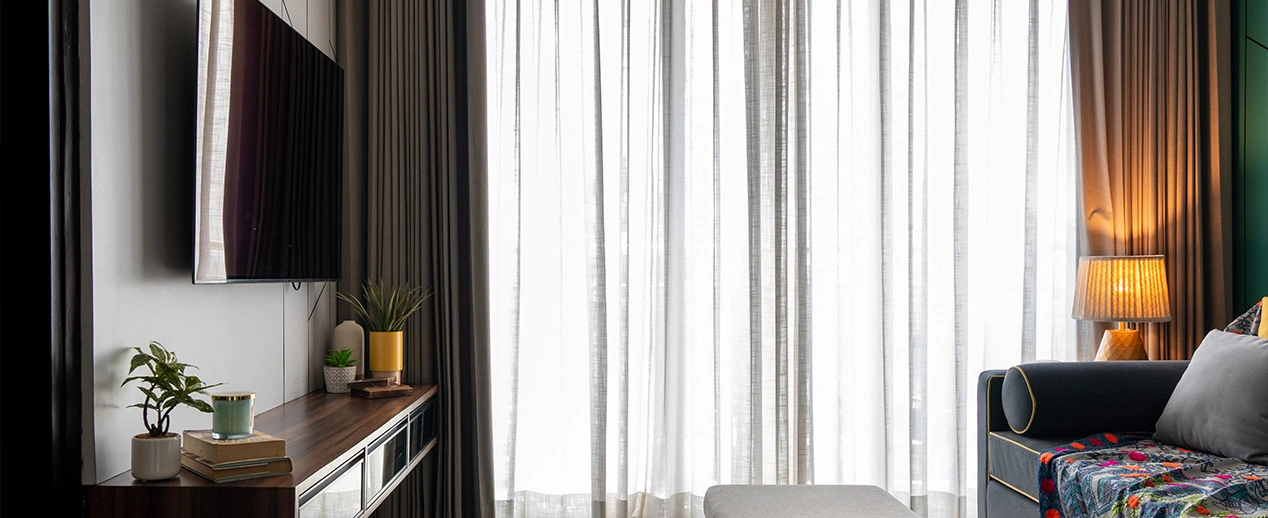
- Linen, jute, and cotton in soft furnishings give rooms a layered, lived-in feel.
- Unpolished stone and travertine in countertops and flooring celebrate natural imperfection rather than hiding it.
The material story of 2026 leans heavily into texture and authenticity. Natural imperfection is becoming desirable. People want to see the hand of the maker, the variation in the material. It adds character that mass-produced finishes simply cannot match.
Form and Layout
Warm minimalism does not mean cramming more in. It means choosing better.
- Curved furniture is replacing sharp-edged pieces. Rounded sofas and arched doorways feel softer and more organic.
- Hidden storage keeps surfaces clean without sacrificing function.
- Open layouts with smart zoning allow natural light to move through the home. This is especially important in Indian homes where ventilation matters.
Why This Matters More in Indian Homes Than Anywhere Else
The Biophilic Connection
There is a growing body of scientific evidence that connects the quality of our indoor environments to our mental and physical health.
Research published on PMC/NCBI found that biophilic design elements, including natural materials, organic forms, and connection to nature, significantly reduce stress, improve attention, and support recovery from mental fatigue.³ The study examined how built environments directly shape emotional states across multiple psychological indicators.
According to the landmark report 14 Patterns of Biophilic Design by Terrapin Bright Green, biophilic design can reduce stress, improve cognitive performance, and enhance emotion, mood, and preference. Visual connection with nature can lower blood pressure and heart rate, improve mental engagement and attentiveness, and positively impact attitude and overall happiness.
Warm minimalism, with its emphasis on natural materials and organic textures, is essentially biophilic design made practical for everyday homes.
This is not a luxury feature. It is a healthy decision.
India's Craft Heritage Fits Perfectly
Here is something most international design publications miss. Warm minimalism is not just a global trend that India is adopting. In many ways, it is India returning to itself.
- Cane weaving, handloom textiles, Madhubani-inspired patterns, and handcrafted brass accents are all finding their place in warm minimalist interiors.
- Local materials like Jaisalmer stone, terracotta tiles, and Saharanpur carved wood are being paired with clean layouts and minimal ornamentation.
- The result is a home that feels modern and global, but also deeply rooted.
The combination of organic surfaces, sculptural shapes, and environmentally conscious decisions allows homeowners to create spaces that serve as a personal refuge and a representation of their personal values.
How Does Warm Minimalism Actually Get Executed Well?
This is the question that separates good intentions from great outcomes. Warm minimalism looks effortless when done right. It can look muddy or incoherent when done wrong.
The execution comes down to three things: proportion, material quality, and lighting.
- Proportion means knowing what to keep and what to leave out. Warm minimalism is still minimalism. Every piece must earn its place.
- Material quality matters more here than in any other style. Because the palette is restrained, the quality of each surface is immediately visible. A poor-quality wood veneer will stand out. A handcrafted solid wood shelf will elevate the entire room.
- Lighting is the invisible force that ties it all together. Warm, layered lighting, including ambient, task, and accent layers, shifts the mood of a space throughout the day. It works hand-in-hand with warm tones and natural materials to create the sense of calm that defines this style.
This is where professional guidance makes a real difference. A turnkey interior design firm Gurgaon homeowners trust can manage all three of these elements in a coordinated way. No single element works in isolation.
The Role of Architectural Consultation in Getting Warm Minimalism Right
Many homeowners make the mistake of treating warm minimalism as a decorating exercise. They change the paint colour, add a jute rug, and expect a transformation.
But true warm minimalism begins at the structural level.
Architectural consultation addresses questions like: Where does natural light enter the space? How does air move through the home? Which walls can be opened to create flow? What are the load-bearing constraints that affect spatial design?
These questions shape every material and design choice that follows. Getting this layer right first means every subsequent decision builds on a solid foundation.
Without it, even the most beautiful warm terracotta palette can feel wrong if the lighting hits it from the wrong angle, or the room's proportions do not support it.
What Homeowners in Gurugram Are Choosing in 2026
Gurugram is one of the fastest-growing residential markets in India. New developments in DLF Garden City, Sector 90, and surrounding areas are drawing families who want homes that reflect who they are now, not who they were a decade ago.
The demand for turnkey interiors in Gurgaon has grown significantly as homeowners want end-to-end execution. They do not want to manage separate architects, contractors, and vendors. They want one team that takes full responsibility for the outcome.
This is especially true for warm minimalism, where the coherence of the design depends on every element working together. A single mismatched finish or a poorly executed joint can break the harmony of the entire space.
How Colonelz Approaches Warm Minimalism
Colonelz, founded by Col Biraj Sahay and Capt Lalita Sahay, brings a distinctive philosophy to every project: military precision applied to design. This means timelines are respected, quality is non-negotiable, and nothing is left to chance.
As a turnkey interior design firm Gurgaon clients rely on for end-to-end execution, Colonelz manages everything from the initial consultation to the final handover. This is particularly valuable for warm minimalism projects, where consistency across materials, lighting, and spatial planning determines whether the design succeeds.
The team at Colonelz begins every project by understanding how the clients actually live. Their routines. Their preferences for light. The way they move through a home. This informs every material choice and spatial decision that follows.
As a leading turnkey interior design firm Gurgaon homeowners trust, Colonelz has delivered over 400,000 sq ft of residential and commercial space across more than 250 projects. The experience shows not just in aesthetics, but in the quality of execution.
What Most People Don't Know About Warm Minimalism
Most people know the look. Few know the depth behind it.
- Warm minimalism has roots in Japanese wabi-sabi, the philosophy of finding beauty in imperfection and transience. The embrace of natural materials with visible grain and texture is not incidental. It is intentional.
- Pantone's 2025 Colour of the Year was Mocha Mousse, a warm, deep brown. This accelerated the move toward richer warm neutrals globally. In 2026, these tones have become the standard baseline for premium Indian interiors.
- The limewash paint technique dates back over 2,000 years. Ancient Roman builders used it extensively. Its revival in 2026 interiors is a sign that homeowners are reaching for materials with history, not just novelty.
- Unglazed terracotta tiles regulate indoor temperature naturally. In Indian climates, this is a functional advantage, not just an aesthetic one. They absorb heat during the day and release it slowly, keeping interiors cooler.
References
- Xu, Y., & Wu, S. (2022). Indoor Color and Space Humanized Design Based on Emotional Needs. Frontiers in Psychology, 13, 926301. frontiersin.org
- Outlook Luxe. (2026, February 16). 9 Interior Design Trends Dominating 2026. luxe.outlookindia.com
- Browning, W., Ryan, C., & Clancy, J. (2014). 14 Patterns of Biophilic Design. Terrapin Bright Green. Retrieved via urbannext.net
- IMARC Group. (2025). India Interior Design Market Size, Share & Forecast, 2026–2034. imarcgroup.com
- Mordor Intelligence. (2026, January). India Interior Design Market. mordorintelligence.com
- Gillis, K., & Gatersleben, B. (2015). A Review of Psychological Literature on the Health and Wellbeing Benefits of Biophilic Design. Buildings, 5(3), 948–963. mdpi.com
- Livspace. (2026, January 1). Interior Design Trends for 2026: The Big Forecast. livspace.com/in/magazine
- Shruti Sodhi Interior Designs. (2026, February 12). The 10 Biggest Interior Design Trends of 2026. shrutisodhi.com
FAQs
1. Is warm minimalism suitable for small apartments in Gurugram?
Absolutely. In fact, it works especially well in compact spaces. Warm tones create an illusion of depth, and the uncluttered layouts that define this style make smaller rooms feel open and intentional rather than crowded. The key is choosing furniture with clean lines and investing in good lighting design to layer warmth without adding bulk.
2. Does switching to warm minimalism require a full renovation?
Not necessarily. It depends on the current state of the space. Some homes can shift meaningfully with updated wall finishes, new soft furnishings, and revised lighting. Others need structural changes to achieve the proportions and flow that warm minimalism requires. This is why a professional consultation is valuable before committing to a direction. It saves time, money, and the frustration of doing things twice.
3. How do I make sure warm minimalism does not start looking cluttered over time?
This comes down to discipline in curation. The philosophy behind warm minimalism is quality over quantity. Every new item added to a space should replace something else or earn its presence on its own. Built-in storage solutions are your best tool here. They keep surfaces clean while allowing you to own the things you love without visual noise taking over the space.
4. What is the difference between warm minimalism and the Japandi style?
They are related but not the same. Japandi blends Japanese wabi-sabi with Scandinavian hygge, leaning toward cooler, more muted tones and a stricter sense of restraint. Warm minimalism is broader. It allows for richer earthy colours like terracotta and ochre, and it embraces Indian craft traditions more openly. Think of Japandi as warm minimalism's quieter, more disciplined cousin. Both prioritise natural materials and clean layouts. But warm minimalism gives you more room to express personality and cultural identity through your choices.
5. How long does a warm minimalist interior project typically take from consultation to completion?
It depends on the scope. A single-room refresh with updated finishes, lighting, and soft furnishings can be done in four to six weeks. A full home project involving structural changes, custom furniture, and a complete material overhaul typically takes three to five months. The key is working with a team that sets honest timelines from the start and sticks to them. At Colonelz, a site visit happens within 48 hours of contract signing, and a full project timeline is shared before work begins. This keeps clients informed and removes the guesswork that makes most renovation projects stressful.
 Residential Turnkey
 Residential Design Consultation
 Residential Construction
 Commercial Turnkey
 Commercial Construction
 Workspaces & Offices
 Architectural Turnkey
 Architectural Consultation
 Retail & Hospitality