What Does "Investment" Actually Mean in Design?
Most people think an investment means buying stocks or property. But an investment is simply something that gives you more back than you put in. Good design does exactly that.
- It adds measurable property value. According to research compiled by Country Living, a thoughtful redecoration alone can boost a home's value by up to 10%, without any structural changes. A minor kitchen remodel, when done well, returns up to 113% ROI at resale, according to Zonda's 2025 Cost vs. Value Report. That is more than you spent.
- It is not a one-time cost. Poor design decisions cost you repeatedly. Bad space planning means buying more furniture to fix problems. Cheap materials need replacing. Wrong lighting means you live in discomfort. A good design, done once with intention, saves you from expensive corrections later.
- It has a compounding effect on your daily life. The quality of your environment affects your energy, your focus, and your mood every single day. That is not a soft benefit. That is a measurable human output.
Does Good Design Really Pay Off? Here Is the Data
People often ask: Is this actually proven, or is it just what designers say to charge more? The research is detailed.
A kitchen remodel can return up to 80% of the investment, while bathroom renovations can see an ROI of around 70%. These are not marketing claims. They come from market research tracking actual resale outcomes.
The global interior design market was estimated at USD 137.93 billion in 2024 and is projected to reach USD 175.74 billion by 2030. This explosive growth is driven by one thing: people are recognising that design creates tangible returns.
According to a 2024 publication by the National Association of Realtors (NAR), an interior painting project can yield a 107% return on investment. Something as simple as professional paint, done with the right colours and finishes, returns more than it costs.
"Design is not just what it looks like and feels like. Design is how it works." — Steve Jobs, Co-founder, Apple Inc.
The same logic that Steve Jobs applied to products applies directly to spaces. A space that works well for the people inside it is a space worth paying for.
The Hidden Cost of Cheap Design
Here is a question worth sitting with: what does it actually cost you to NOT invest in good design? The answer is more than you think.
- Wasted space costs money. Poor space planning means unused corners, awkward furniture arrangements, and rooms that feel cramped even when they are large. Every wasted square foot in your home or office is money you paid for but cannot use.
- Bad lighting affects your health. Insufficient or harsh lighting strains the eyes, disrupts sleep cycles, and reduces alertness. These are not small inconveniences. They are chronic, daily costs to your well-being.
- Cheap materials degrade fast. Replacing a low-quality floor after three years costs far more than investing in a durable one upfront. The same applies to cabinetry, fixtures, and finishes.
- Poorly designed offices hurt productivity. A study by the Design Council found that strategic office design can lead to a 20% increase in employee productivity. The cost of low productivity in a business is enormous. Good design is a direct counter to that.
The Commercial Case: Why Businesses Cannot Afford to Ignore Design
If you run or own a business, the stakes are even higher. Your office, your store, your hospitality space, your clinic — all of it sends a signal before a single word is spoken.
What does your space say about your brand?
- A study by the American Society of Interior Designers found that workers who liked their office environment are 31% more likely to be satisfied in their job. Employee satisfaction directly reduces turnover. Hiring is expensive. Retention is an ROI.
- Employees with access to natural light and outdoor views reported an 18% increase in productivity. This is not a perk. This is a performance driver that shows up in your numbers.
- Research by Green Plants for Green Building suggests that incorporating biophilic elements such as plants in the office can lead to a 12% increase in productivity and a 19% improvement in concentration.
This is why commercial interior solutions for offices, retail spaces, and hospitality venues are growing as a serious business priority. Companies that invest in their spaces attract better talent, retain staff longer, impress clients faster, and work more efficiently. The space is not a cost centre. It is a competitive advantage.
Why a Turnkey Approach Changes the Equation
Most people who have ever "designed on a budget" know the story. You hire one vendor for flooring, another for carpentry, and a third for electrics. Nobody talks to each other. Timelines collide. You end up spending more, not less, and the final result is a compromise.
This is exactly why turnkey interior design services matter. When a single firm handles design, procurement, execution, and delivery, the result is coherent, cost-controlled, and completed on time.
- Design decisions are made holistically, not in isolation.
- Materials and vendors are sourced efficiently, reducing wastage.
- There is one point of accountability, not five.
- You move into a finished space. No patchwork of half-done work.
The turnkey model is particularly powerful for commercial projects where delays cost real money. Every week a restaurant is not open, every day an office is not functional, it is revenue lost.
Real Spaces, Real Returns: What Happens When Design Is Done Right
Think about the last time you walked into a well-designed hotel lobby or a beautifully planned office. You felt something. You trusted the brand. You wanted to stay longer.
That feeling is not accidental. It is the result of deliberate decisions made about light, proportion, texture, colour, flow, and functionality. And every one of those decisions had a purpose.
Now think about a retail store where the layout makes no sense, the lighting is flat, and the shelves are cluttered. You leave faster. You buy less. You do not come back.
Design shapes behaviour. In commercial contexts, that behaviour translates directly into revenue.
- Well-designed retail spaces increase dwell time. More time in the store means more purchases.
- Well-designed restaurants improve table turnover and guest experience, driving repeat visits.
- Well-designed offices signal seriousness to clients and confidence to employees.
This is why interior design investment pays dividends in commercial contexts that go far beyond aesthetic appeal.
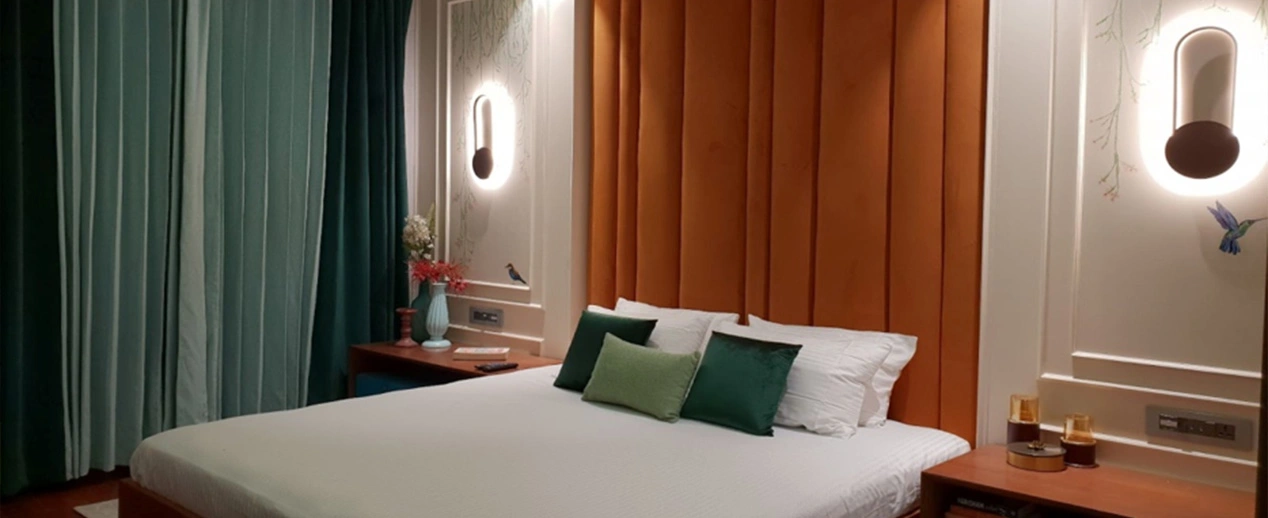
What Makes a Design Decision an "Investment" vs. an "Expense"
Not all design spending is equal. The question to ask is not "how much does this cost?" but "what does this give me back?" Here is a simple way to think about it:
- Expense: Buying trendy furniture that dates in two years and adds no structural value to the space.
- Investment: Designing custom storage that maximises every inch of your floor plan.
- Expense: Choosing cheap light fixtures to save money, then living with poor visibility for years.
- Investment: Layering ambient, task, and accent lighting that serves every function the space needs.
- Expense: Generic paint colours because they were in stock.
- Investment: A curated colour palette chosen for how it makes people feel in that specific room and light.
The difference is intention. Interior design investment done with a clear brief, a skilled team, and a long-term view is not spending money on your space. It is putting money into something that pays you back every single day.
How Colonelz Approaches Design as Investment
Colonelz was founded by veterans Col Biraj Sahay and Capt Lalita Sahay, and that military background shows in how every project is handled. Military precision, in this context, means no guesswork, no over-promising, and no corners cut.
The philosophy at Colonelz is that a space should reflect your aspirations, values, and lifestyle, not just your budget for this quarter. That means asking the right questions at the start, planning every detail before a single nail is driven, and delivering a finished space that does not just look good but works for the life being lived in it.
Every interior design investment made through Colonelz is backed by 25+ years of experience, 250+ satisfied clients, and 400,000+ square feet delivered across residential, commercial, and hospitality projects in the Delhi NCR region.
The Bottom Line
So, is interior design an expense? On a balance sheet entry, yes. It costs money. But so does a good hire, a well-located office, or a quality piece of equipment. The question is never whether something costs money. The question is always what it costs you not to have it.
A space designed with care and purpose returns value in property price, in productivity, in health, in client perception, and in the simple, daily experience of being somewhere that feels right.
That is not a soft benefit. That is an investment.
References
- Zonda Media, 2025 Cost vs. Value Report, costvsvalue.com
- National Association of Realtors (NAR), 2024 Remodeling Impact Report, nar.realtor
- Grand View Research, Interior Design Market Size & Share Report, grandviewresearch.com
- American Society of Interior Designers (ASID), Workplace Design Research Study, asid.org
- Design Council (UK), The Value of Design Factfinder Report, designcouncil.org.uk
- Green Plants for Green Building, Human Health & Wellbeing, plants-solutions.com
- Constructive Space, Measuring the Impact of Office Design, constructivespace.com
- Dara Agruss Design, 19 Interior Design Facts & Statistics in 2024, daraagrussdesign.com
FAQs
1. How does interior design increase the value of my property?
Good design improves the functional and aesthetic quality of a space, both of which directly affect how buyers and tenants perceive and price a property. A well-planned kitchen, a cohesive colour palette, quality materials, and smart storage all signal that a space has been cared for. Studies show that professionally designed interiors can add up to 10% to a property's resale value, and certain interior upgrades like kitchen remodels can return over 100% of the investment at sale.
2. Is it worth hiring a professional interior designer, or can I manage it myself?
You can manage it yourself, but the real question is what it costs you when things go wrong. Without professional expertise, common pitfalls include poor space planning, mismatched materials, incorrect lighting, and budget overruns from having to redo work. A professional designer brings a trained eye, vendor relationships, and a structured process that saves time, avoids costly mistakes, and produces a result that actually adds value rather than just filling the space with furniture.
3. What is the difference between interior design and interior decoration?
Interior decoration focuses on the surface layer: colours, furnishings, accessories, and how a space looks. Interior design goes several layers deeper. It addresses space planning, lighting design, material selection, functionality, structural considerations, and how a space actually works for the people using it. At a professional level, interior design is a discipline that requires understanding architecture, human behaviour, and construction, not just aesthetics.
4. How does office interior design affect business performance?
Office design directly impacts employee productivity, satisfaction, and retention. Research from the American Society of Interior Designers shows that employees who like their workspace are 31% more likely to be satisfied in their jobs. Studies also show that access to natural light alone can increase productivity by up to 18%. Beyond the team, a well-designed office signals professionalism to clients and partners before a single conversation happens. For businesses, the ROI of a good workspace shows up in output, attrition rates, and brand perception.
5. What does a turnkey interior design service include, and why is it better than managing vendors separately?
A turnkey interior design service means one firm handles everything: concept, design, material procurement, execution, and final delivery. You do not coordinate between a designer, a contractor, an electrician, and a carpenter separately. That coordination failure is where most projects go over budget and behind schedule. With a turnkey approach, there is one point of accountability, a single timeline, and a coherent outcome where every element has been planned to work together. For both residential and commercial projects, it is typically faster, more cost-efficient, and far less stressful.
 Residential Turnkey
 Residential Design Consultation
 Residential Construction
 Commercial Turnkey
 Commercial Construction
 Workspaces & Offices
 Architectural Turnkey
 Architectural Consultation
 Retail & Hospitality

73164796773394124239.webp)

78371444348832544578.webp)
41937659487827043099.webp)