Picking your first real office is a big moment for any founder. It shapes your monthly costs, your team culture, and your room to grow. In Delhi NCR, startups and small firms face one common question. Should you rent a co-working desk or build a private office of your own? Both paths can work well. The right pick depends on your team size, your budget, and your growth plans. This guide breaks it down in plain words.
Why This Choice Feels So Hard
- Your office is often the second biggest cost after salaries. A wrong lease can lock you into rent you cannot afford for years.
- Co-working feels quick and safe. A private office feels stable and grown-up. Both feelings are valid, but neither should drive the final call.
- The market is shifting fast. Knowing the trend helps you plan for two years ahead, not just for next month.
Is Co-Working Really the Cheaper Option?
- Co-working needs almost no money upfront. You pay per seat and walk in ready. This suits early teams testing an idea on tight cash.
- You skip the cost of furniture, internet, cleaning, and repairs. The operator handles all of it, so your team stays focused on the work.
- It scales up and down with ease. Add seats in a busy month, drop them when a project ends. That flexibility protects your runway.
- The catch shows up later. Per-seat rent adds up fast once your team crosses fifteen or twenty people.
When Does a Private Office Make More Sense?
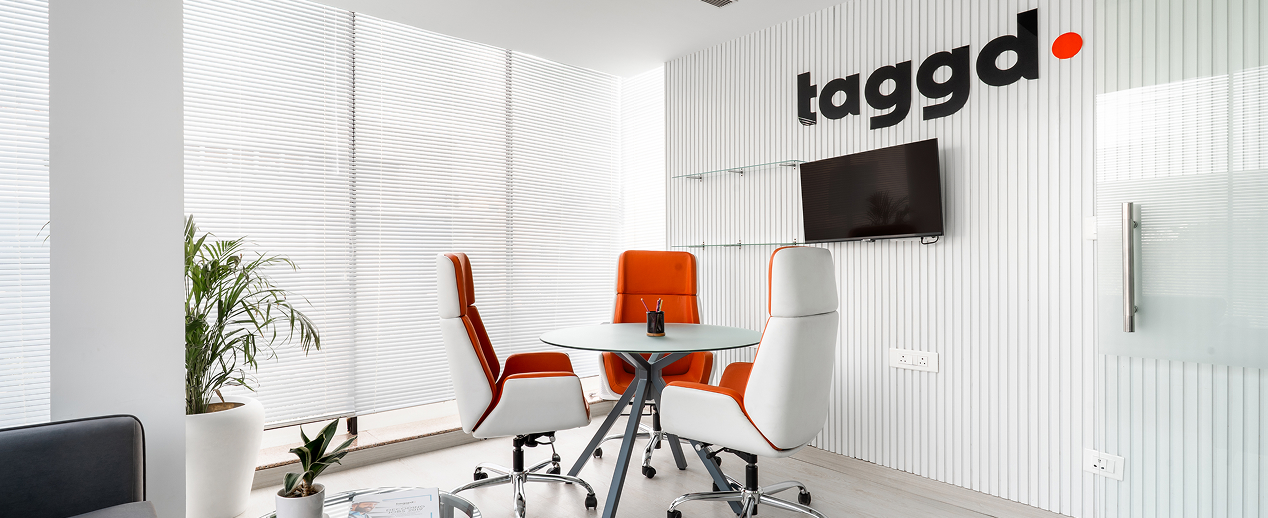
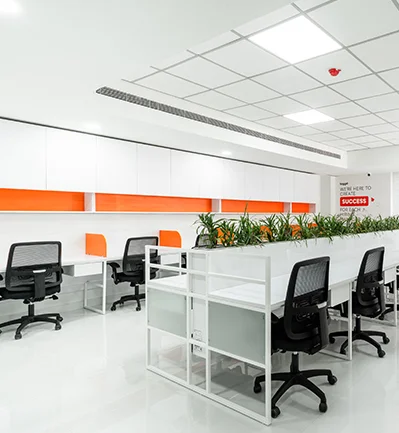
- A private office gives you full control. You shape the layout, the branding, and the flow to match how your team truly works.
- It protects your data and your privacy. Sensitive calls, client meetings, and quiet focus all get easier without shared walls.
- For teams above twenty, a private fit-out often costs less per head across a three- to five-year lease.
- A well-built space also helps you hire. Talent notices a workplace that feels cared for and looks the part.
Skilled office interior designers in Gurgaon can turn a bare shell into a space that fits your budget and your brand. A good corporate interior designer company also plans for growth, so you do not have to rebuild in a year.
The Trends Shaping Your Decision
- India's flexible office market was worth about USD 5.99 billion in 2025 and may reach USD 11.39 billion by 2030.
- Nearly 54% of Indian firms now pick co-working mainly to cut costs, as per an Anarock market study.
- Delhi office fit-outs averaged close to USD 69 per square foot in 2024, second only to Mumbai, as per Cushman & Wakefield.
- India remains one of the most cost-friendly fit-out markets in Asia Pacific. That makes a private build more affordable here than abroad.
What Hidden Costs Should You Watch For?
- Read the fit-out clause with care. Some leases ask you to return the space to its old state when you leave, which costs real money.
- Ask who pays for power backup, parking, and upkeep. These small lines add up and often hide deep in the fine print.
- Plan for a deposit that can lock three to six months of rent. Factor that into your cash flow well before you sign.
Bringing in seasoned office interior designers in Gurgaon early can flag these costs before you sign, not after the ink dries.
Industry voices agree that flexibility now drives the market. Anuj Puri, Chairman of the Anarock Group, notes that flex space gives workers "flexibility, economic viability and comfort" while helping firms hire across many cities. The lesson is simple. Match the space to your stage, not to the trend of the day.
How the Right Design Partner Helps
- Colonelz works with startups and SMEs to plan offices that grow with them. The team balances cost, comfort, and a clean brand feel.
- Trusted office interior designers in Gurgaon handle layout, wiring, lighting, and furniture in one plan, so you avoid vendor chaos.
- Experienced commercial interior designers in Delhi know the local rules, permits, and building norms that often slow an untested team.
- With Colonelz, you get one point of contact from design to handover. That saves time, money, and a lot of stress.
Choosing between co-working and a private fit-out is not about right or wrong. It is about timing. Start lean, then build your own space once your team and cash flow are ready. When that day comes, Colonelz can help you design an office that works as hard as you do.
References
- Mordor Intelligence, "India Flexible Office Space Market" (2025). https://www.mordorintelligence.com/industry-reports/india-flexible-office-space-market
- Anarock, "Navigating Flex: Indian Coworking Market Analysis," reported by Business Standard (2024). https://www.business-standard.com/industry/news/market-size-for-flexible-office-spaces-in-india-to-double-by-2030-anarock-124031400478_1.html
- Cushman & Wakefield, "India Office Fit-Out Cost Guide" (2025). https://www.cushmanwakefield.com/en/india/insights/office-fit-out-cost-guide
 Residential Turnkey
 Residential Design Consultation
 Residential Construction
 Commercial Turnkey
 Commercial Construction
 Workspaces & Offices
 Architectural Turnkey
 Architectural Consultation
 Retail & Hospitality