Commercial interior design has evolved from a decorative afterthought into a core business strategy. Today, how a workspace or customer-facing environment looks and feels directly impacts employee productivity, customer trust, and long-term brand perception. In a city as competitive and fast-moving as Delhi, getting this right is no longer optional.
This article explores how smart interior design decisions drive measurable business outcomes, and why more Delhi-based businesses are choosing experienced design partners to make it happen.
First Impressions Are Built Into the Walls
Research consistently shows that customers form a first impression within seconds of entering a space. A 2023 Salesforce study found that 88% of customers believe the experience a company provides is just as important as its products or services. That experience begins before a word is spoken — it begins with the environment.
Think about the last time you walked into a poorly lit, cluttered, or confusingly laid-out office. Did it inspire confidence? Probably not. Now think about a space that felt calm, organised, and visually coherent. The second environment communicates competence, care, and credibility, without saying anything at all.
This is why leading commercial interior design firms invest heavily in understanding a brand's values before they pick a single material or furniture piece. The design is a translation of who you are, what you stand for, and who you serve.
For businesses in Delhi's competitive market, this translation needs to be accurate and compelling. A mismatched interior can undermine an otherwise strong brand. A well-executed one can elevate it.
The Real Cost of Ignoring Interior Design Strategy
Many businesses ask the same question upfront: "Is professional interior design really worth the investment?" It is a fair question. But framing it purely as a cost misses the bigger picture.
Consider the data. According to the International WELL Building Institute, well-designed workspaces can boost employee productivity by up to 20% and reduce absenteeism significantly. For retail environments, a study by the Journal of Business Research found that ambient factors — lighting, scent, music, and layout — directly influence purchasing decisions and dwell time.
Here is what businesses often overlook when they skip strategic design:
- Poor spatial flow leads to frustrated customers and confused staff
- Outdated or mismatched aesthetics signal a lack of attention to detail
- Poor acoustics and lighting reduce employee focus and morale
- Inflexible layouts limit future growth and team collaboration
- Generic spaces fail to differentiate the brand from competitors
The real cost, then, is not in hiring commercial interior design companies — it is in not doing so. Businesses that treat interior design as an expense often discover the hard way that a poorly designed space drives customers and talent away.
What Expert Commercial Designers Actually Do Differently
There is a meaningful difference between furnishing a space and designing one. Professional commercial interior designers in Delhi begin with a strategic brief. They study your customer journey, your brand guidelines, your team dynamics, and your future growth plans. The result is a space that is not just beautiful — it is functional, scalable, and on-brand.
As renowned business consultant Martin Lindstrom has noted: "Your brand is what other people say about you when you're not in the room." A great interior designer ensures your space does the talking for you — even when you are not there.
The best commercial interior design firms approach each project through multiple lenses:
- Brand alignment: Colours, textures, and materials are chosen to reflect brand personality
- User experience: Traffic flow, accessibility, and comfort are mapped for both customers and staff
- Compliance and safety: Local building codes, fire safety, and accessibility norms are factored in from day one
- Sustainability: Energy-efficient lighting, sustainable materials, and smart space utilisation reduce long-term costs
- Technology integration: AV systems, smart controls, and connectivity are built into the design — not added as an afterthought
This is the kind of holistic, detail-oriented approach that separates average fit-outs from truly transformative commercial spaces.
Interior Design for Commercial Spaces: Delhi's Unique Context
Delhi is not a single market. It is dozens of micro-markets, each with its own culture, clientele, and competitive dynamics. A design approach that works in a Lajpat Nagar showroom may not translate to a Cyber City corporate headquarters. Interior design for commercial spaces in Delhi must account for this diversity.
There is also the practical matter of scale. Delhi's commercial real estate market is one of the largest in South Asia, with Grade A office space growing rapidly year on year. According to Knight Frank India, Delhi-NCR recorded over 8 million sq ft of office space absorption in 2023 alone. Every one of those square feet is an opportunity — or a missed one — depending on how it is designed.
Local factors that smart commercial designers account for include:
- Delhi's extreme climate — interiors need robust HVAC integration and heat-insulating materials
- Cultural nuances — from colour symbolism to Vastu preferences in certain client segments
- Vendor ecosystems — knowing where to source quality materials locally keeps timelines and budgets on track
- Neighbourhood branding — aligning the interior's tone with the expectations of the surrounding area
This is precisely the kind of local, contextual expertise that sets established Delhi-based design partners apart from generic national chains.
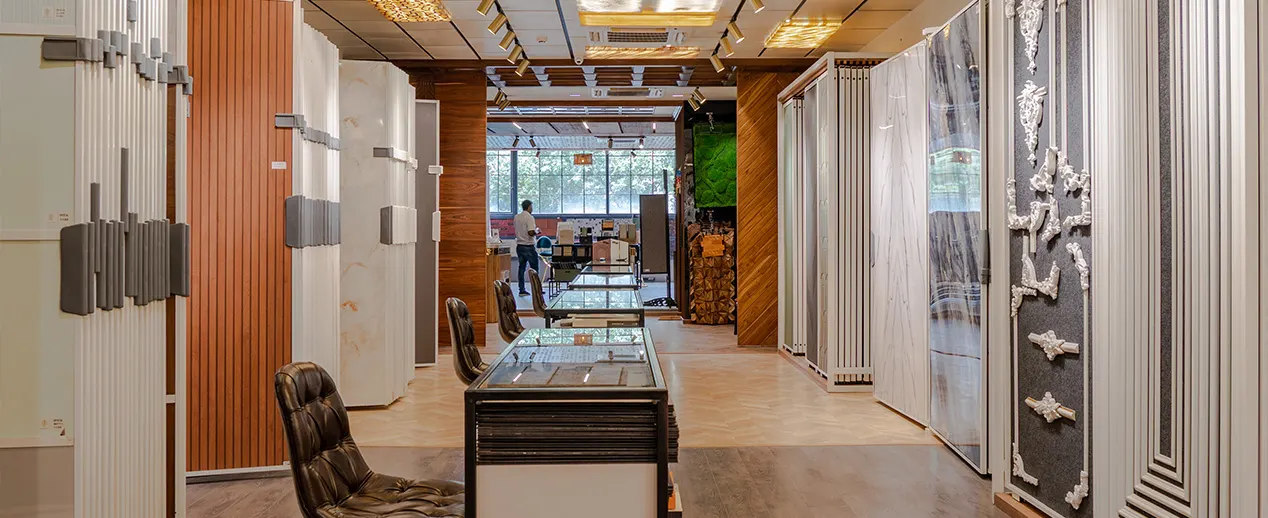
Why Colonelz Is Redefining Commercial Interior Design in Delhi
Colonelz has built its reputation on one guiding belief: every commercial space tells a story, and that story should be told well. With a portfolio spanning corporate offices, retail environments, hospitality venues, and healthcare facilities, Colonelz brings together architectural rigour and creative intelligence to deliver spaces that work as hard as the people inside them.
What sets Colonelz apart from other commercial interior design firms is the depth of their process. Every project begins with a discovery phase — understanding the client's brand, culture, and long-term vision. From there, the team develops a design strategy that is aligned with business goals, not just aesthetic preferences.
Colonelz handles the entire journey in-house: concept development, 3D visualisation, material sourcing, project management, and final execution. This integrated model means fewer handoffs, fewer delays, and a final result that stays true to the original vision. Clients across Delhi-NCR trust Colonelz not just for the quality of their work, but for the reliability of their delivery.
Whether you are fitting out a startup's first office or reimagining a flagship retail store, Colonelz brings the strategic thinking and creative precision your brand deserves.
References
- Salesforce. (2023). State of the Connected Customer. salesforce.com
- International WELL Building Institute. (2022). The Business Case for WELL. wellcertified.com
- Turley, C. & Milliman, R.E. (2000). Atmospheric Effects on Shopping Behavior. Journal of Business Research.
- Knight Frank India. (2024). India Real Estate: Office Market Overview 2023. knightfrank.co.in
- Leesman Index. (2023). The World's Largest Study on Employee Workplace Experience. leesmanindex.com
- Lindstrom, M. (2011). Brandwashed. Crown Business.
FAQs
How long does a commercial interior design project typically take in Delhi?
Timelines vary based on scope and size. A small office fit-out might take four to eight weeks, while a large retail or hospitality project could run for four to six months. Key factors include design complexity, material sourcing, structural changes, and local authority approvals. Working with an experienced firm helps keep timelines realistic and on track.
What is the typical cost of commercial interior design in Delhi?
Costs range widely depending on project type, quality of materials, and scale of work. A mid-range corporate office fit-out in Delhi typically costs between ₹1,500 to ₹3,500 per sq ft, while premium retail or hospitality projects can go higher. A good design firm will offer a detailed cost breakdown upfront so there are no surprises.
How do I know if my current commercial space is hurting my brand?
Some signs are obvious — outdated furniture, poor lighting, cluttered layouts, or an interior that looks nothing like your brand identity. Others are subtler: high employee turnover, low customer dwell time, or negative feedback about the "feel" of your space. If clients or employees frequently seem uncomfortable, a design audit is a worthwhile first step.
Can commercial interior design improve employee productivity?
Yes, significantly. Research from the Leesman Index shows that a well-designed workspace has a direct, measurable impact on employee satisfaction and output. Factors like natural light, acoustic design, ergonomic furniture, and collaborative zones have all been linked to higher performance. For many businesses, the productivity gains alone justify the design investment.
What should I look for when choosing a commercial interior design firm in Delhi?
Look for a firm with a strong portfolio in your industry, a clear and transparent process, and end-to-end project management capabilities. Ask about their design discovery process — the best firms start by understanding your business, not just your budget. Check client testimonials, review past projects, and make sure they have experience navigating Delhi's local regulations and supplier networks.
 Residential Turnkey
 Residential Design Consultation
 Residential Construction
 Commercial Turnkey
 Commercial Construction
 Workspaces & Offices
 Architectural Turnkey
 Architectural Consultation
 Retail & Hospitality